

Did you know that owls come in a range of sizes, from the tiny Elf Owl, barely the size of a hummingbird, to the majestic Great Horned Owl, which can stand nearly two feet tall? Understanding the height of different owl species is essential for bird enthusiasts, naturalists, and those simply curious about these fascinating creatures. Not only does this knowledge help in identifying owls in the wild, but it also enhances our appreciation for their diverse adaptations and habitats. Whether you’re an experienced birder looking to refine your identification skills or a beginner eager to learn more about these nocturnal hunters, this exploration of owl heights offers valuable insights that connect us to the incredible diversity of the avian world. Join me as we delve into the heights of various owl species, compare their unique characteristics, and celebrate the wonder of these remarkable birds.
How Tall Are Common Owl Species?
When considering the height of common owl species, it’s fascinating to note that these avian hunters exhibit a remarkable range in size. Most owl species stand anywhere from about 8 to 28 inches tall. This variance not only accounts for the different species known around the world but also reflects their diverse adaptations to various habitats and ecological roles.
Let’s explore some of the notable species. The Great Horned Owl, a well-recognized species, can stand up to 25 inches tall, making it one of the larger owls. Its impressive stature is complemented by its distinctive tufted ears, which enhance its iconic appearance. In contrast, the petite Elf Owl, at a mere 6-7 inches, is one of the smallest owl species. Despite its size, this little owl is a fierce nocturnal predator, often found hunting insects and small vertebrates in the deserts of the southwestern United States and Mexico.
Owls’ heights can be influenced by several factors, including their diet, habitat, and the ecological niches they occupy. For example, taller owls like the Barn Owl are often more effective hunters in open fields due to their ability to spot prey from a greater distance. On the other hand, smaller owls like the Northern Saw-whet Owl have adaptations that allow them to thrive in dense forests, where agility and camouflage are crucial for survival.
Understanding the height of these fascinating birds can enhance your birdwatching experiences. When out in the field, look for specific characteristics-like the silhouette and proportions of the owl-to help identify which species you’re observing. Whether you’re captivated by the towering presence of a Great Horned Owl or the charming diminutive stature of an Elf Owl, each species adds a unique thread to the rich tapestry of avian life.
Understanding Owl Size Variations
Owl species captivate bird enthusiasts not just with their mysterious nighttime behaviors but also with their remarkable size variations. From the towering Great Horned Owl to the diminutive Elf Owl, the differences in height among these avian creatures highlight their evolutionary adaptations to various environments. Understanding these variations can enrich your birdwatching experience, allowing you to appreciate the unique characteristics and behaviors of each species more deeply.
Owl sizes can vary significantly depending on a range of factors, including species, sex, and habitat. For example, the smallest common owl, the Elf Owl, measures a mere 6-7 inches tall, often nesting in cacti and taking advantage of its small stature to navigate tight spaces, which is a stark contrast to the majestic Eurasian Eagle Owl, which can reach heights of up to 28 inches. In North America, the Barn Owl, typically standing about 12-16 inches, showcases how size correlates with hunting strategies. Its broad wings allow it to glide silently over fields, making it an effective predator in open terrain.
The reasons these size differences occur are multifaceted. Smaller owls tend to be more agile and adept at hunting in densely forested areas where camouflage and quick movements are key. Conversely, larger owls, equipped with powerful talons and considerable wingspans, excel in open habitats, using their height to spot potential prey from great distances. Each species exhibits adaptations specific to their ecological niches, reinforcing the idea that size plays a crucial role in their survival.
When observing owls, pay attention to specific traits that indicate their size and habitat preference. The silhouette, ear tufts, and proportions can offer clues about which species you may be encountering. Whether you’re spotting a large, regal Great Horned Owl perched in a tree or a tiny, agile Northern Saw-whet Owl flitting about in the underbrush, the diversity of sizes and the fascinating behaviors that accompany them make owls a thrilling subject for both novice and seasoned birders alike.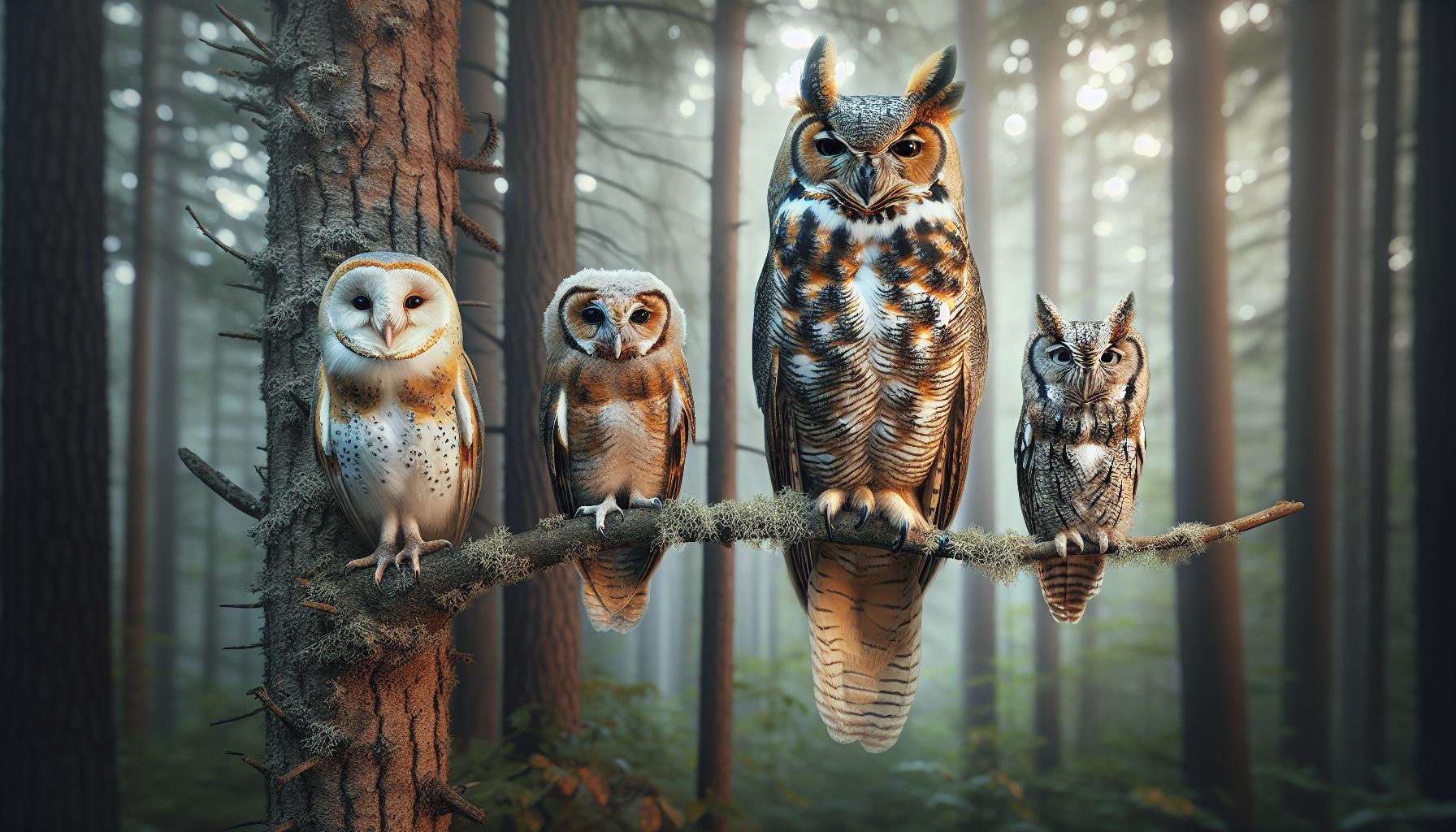
The Tallest Owls: Majestic Giants
The largest owls in the world are truly magnificent creatures that command attention not only for their size but also for their striking features and adaptations. Among these, the Eurasian Eagle Owl stands out as a behemoth, reaching heights of up to 28 inches (70 cm) and boasting an impressive wingspan that can exceed 6 feet (180 cm). These birds are readily recognized by their distinctive ear tufts, vibrant orange eyes, and the powerful, piercing gaze that can intimidate even their most formidable foes. Their size isn’t just for show; it plays a crucial role in their hunting strategy, allowing them to dominate their territory and spot potential prey from incredible distances.
Another notable giant in the owl family is the Great Horned Owl, commonly found across the Americas. Typically measuring between 18 to 25 inches (45 to 63 cm) in height, this species is often easily identified by its tufts and the bold, mottled plumage that provides excellent camouflage in wooded environments. Known as fierce predators, Great Horned Owls primarily hunt at night and can take down prey much larger than themselves, including other birds of prey. Their strength and adaptability make them a key species in various ecosystems, showcasing the critical role that larger owls play in maintaining balance in their habitats.
Characteristics of Majestic Giants
When observing these majestic giants, it’s essential to note how their size influences their behavior and ecology. Larger owls tend to require larger territories, often preferring open landscapes or edges of forests where they can hunt effectively. Factors such as diet, habitat availability, and even their social structures can be directly tied to their impressive stature.
A unique aspect of these owls is their nesting habits. For example, the Eurasian Eagle Owl often uses abandoned nests of other birds, preferring high vantage points to protect their young and keep an eye on potential threats. This behavior exemplifies how their size aids in asserting dominance over other species, ensuring their breeding success in a competitive environment.
As you venture out to spot these imposing owls, look for their distinctive silhouettes against the twilight sky, and listen for the resonant calls that echo in the quiet of night. Both beginners and experienced birders will find that witnessing these majestic giants in their natural habitat is not just a joy but an enriching experience that deepens your appreciation for the incredible diversity of owls. Embrace the thrill of owl watching, and let the awe-inspiring presence of these towering raptors enhance your connection to the wild.
The Smallest Owls: Dainty Wonders
Among the diverse array of owl species, the smallest owls are often the most enchanting. One of the most notable examples is the Elf Owl, which measures a mere 5 to 6 inches (12 to 15 cm) in height. This tiny marvel, native to the southwestern United States and Mexico, weighs as little as 1.5 ounces (42 grams), making it not just a visual delight, but also a fascinating study in adaptation. Their small size allows them to thrive in arid environments, where they nest in abandoned woodpecker holes and hunt primarily for insects and small vertebrates during the night.
Another wonder in this category is the Pygmy Owl, specifically the Northern Pygmy Owl, which reaches similar heights of about 6 to 7 inches (15 to 18 cm). With a stout, compact body and a distinctively round head, this owl possesses an endearing appearance that captivates bird watchers. Often found in forests across North America, these owls are known for their bold behavior and territorial calls, which they use to assert dominance despite their size. They primarily prey on small birds and mammals, showcasing a remarkable ability to take on prey larger than themselves.
Identification Tips for the Smallest Owls
When trying to spot these diminutive birds, look for their unique characteristics:
- Elf Owl: Recognizable by its bright yellow eyes and overall soft, grayish-brown plumage with subtle white spots.
- Northern Pygmy Owl: Features a barred chest and bright yellow “eyes” or spots on its back, which help confuse predators.
Despite their size, these owls play crucial roles in their ecosystems, controlling insect populations and serving as indicators of environmental health. For those venturing into the wild to observe them, patience is key. Listen for their soft calls and look for movement in the trees during dusk; a hint of a feathered silhouette might just lead you to an unforgettable sighting of these dainty wonders. The thrill of spotting one of these small owls can deepen your appreciation for the diversity of avian life, inviting an ongoing journey of discovery and connection with nature.
Comparative Sizes of Popular Owl Species
Among the wonders of the avian world, owls stand out not just for their nocturnal habits but also for the impressive range of sizes they encompass. In comparing the heights of popular owl species, we find a fascinating spectrum, from the tiny Elf Owl to the towering Great Horned Owl. Understanding these variations can enhance our appreciation of these creatures, especially for birdwatchers and wildlife enthusiasts.
The Elf Owl, one of the smallest species, measures only about 5 to 6 inches (12 to 15 cm), with a weight as little as 1.5 ounces (42 grams). This diminutive size allows it to thrive in its native arid habitats, renowned for nesting in abandoned woodpecker holes. In contrast, the Great Horned Owl, a true giant of the nocturnal world, can reach heights of 18 to 25 inches (46 to 64 cm) and boasts a wingspan that stretches up to 5.6 feet (1.7 meters). Their large size not only makes them formidable hunters but also helps them adapt to various ecosystems, from dense forests to open prairies.
Height Comparison of Common Owl Species
To provide a clearer perspective on owl sizes, here’s a concise comparison of some well-known owl species:
| Species | Height (inches) | Weight (ounces) |
|---|---|---|
| Elf Owl | 5-6 | 1.5 |
| Northern Pygmy Owl | 6-7 | 4-5 |
| Barred Owl | 16-25 | 16-40 |
| Great Horned Owl | 18-25 | 32-88 |
| Blakiston’s Fish Owl | 24-27 | 48-110 |
Owl size is influenced by various factors including habitat, diet, and evolutionary adaptations. Generally, larger owls tend to occupy more diverse habitats and can prey on larger animals, while smaller owls have evolved to exploit different niches. For birders, understanding these distinctions not only enriches the experience of observing these captivating birds but also fosters a deeper appreciation for their ecological roles. So next time you’re out exploring, keep an eye out for these remarkable differences that remind us of the beauty and diversity in the owl family.
Factors Influencing Owl Height and Size
The variation in owl size offers a fascinating glimpse into their adaptability and ecological roles. Owls occupy a wide range of habitats across the globe, and their height and size are closely tied to the environments they inhabit and the prey they target. A prime example of this is how larger species, like the Great Horned Owl or the Blakiston’s Fish Owl, thrive in diverse habitats, allowing them to hunt larger prey. Their size not only enhances their ability to dominate as predators but also influences their nesting and territorial behaviors.
Conversely, smaller owls, such as the Elf Owl and Northern Pygmy Owl, have evolved to exploit specific niches. Their diminutive stature allows them to maneuver easily through dense foliage and exploit small cavities for nesting, which is crucial for their survival in arid or forested regions. This specialization helps maintain balance within their ecosystems, as these smaller owls predominantly hunt insects and small rodents, contributing to pest control.
Several factors contribute to these size differences, including genetics, evolution, and dietary requirements. For instance, species that hunt larger prey often exhibit greater body mass and height. Moreover, environmental pressures, such as climate and availability of food sources, play a significant role in shaping these adaptations. By understanding the interconnectedness of these factors, birdwatchers and enthusiasts can gain broader insights into owl behavior and the importance of conserving diverse habitats that support various owl species.
Recognizing these influences not only enhances our appreciation of these remarkable birds but also encourages responsible stewardship of the natural environments they depend on. As you observe owls in the wild, consider the intricate relationships between their size, habitat, and role in the ecosystem-an embodiment of nature’s remarkable adaptability.
How to Measure an Owl’s Height Accurately
Measuring an owl’s height can be a fascinating endeavor, but it’s essential to approach it with care and precision. Owls often perch in various positions and can be elusive. Knowing how to gauge their height accurately can enhance your birdwatching experience and deepen your understanding of these majestic creatures. To begin, it’s important to observe the owl from a distance using binoculars or a spotting scope, as getting too close may disturb them.
Start by selecting a point of reference to establish your measurements. A nearby object of a known height can help provide context. For example, if you know the average height of a fence post (approximately 4 feet), you can better estimate the owl’s height in relation to it. Stand at a distance where you can view the owl clearly, thereby minimizing disturbance. As a general practice, use a measuring tape or a smartphone app designed for distance measuring, if you’re able to safely position yourself at a spot where you can line the owl up with your reference point.
During your measurement, remember to take into account the owl’s posture-if it’s perched upright with its head held high, you’ll get a different reading than if it’s sitting hunched over. You can estimate the height by measuring the distance from the base of the perch to the top of the owl’s head. For greater accuracy, measure the owl’s height when it’s settled and still, ideally in the evening or night when they are most active and likely to remain stationary for longer periods.
Holding a notebook or using a digital device to jot down your findings can also help you compare different species over time. For instance, knowing the height of a Great Horned Owl, which averages around 18-25 inches tall, in contrast to a Barn Owl, around 12-20 inches, allows for an enriching understanding of these species and their respective habitats. Keep meticulous notes, and over time, you’ll start to recognize patterns in size differences and behaviors that will significantly enhance your birdwatching skills.
Owls’ Height in Relation to Their Habitat
The height of owls plays a crucial role in their interaction with the environment, influencing their hunting strategies, nesting behaviors, and overall survival. As you delve into the world of these incredible birds, you’ll discover that their stature is not merely a factor of genetic lineage, but also a vital adaptation to specific habitats. For example, larger owls like the Great Horned Owl excel in open woodland areas and mountainous regions, where their height and muscular build allow them to capture larger prey effectively. They can perch higher to spot potential meals, aided by their impressive eyesight.
In more constrained environments, like dense forests, smaller owl species such as the Eastern Screech Owl thrive. Their smaller size enables them to navigate through thick branches with agility, giving them an advantage when seeking out insects and small mammals. Unique adaptations, such as feather patterns and coloration, not only assist in camouflage but also in regulating body temperature for smaller species that may be more exposed in their surroundings.
Understanding how the habitat defines owl height can enhance your birdwatching experience. When observing different species, consider the biome in which they reside. For instance, owls in open grasslands may tend to be taller and long-winged, supporting their need for flight efficiency over expansive areas. Conversely, owls adapted to woodland niches often have stockier builds, allowing for maneuverability in tight spaces.
In summary, an owl’s height is not only an intriguing trait but also a tapestry woven from ecological roles and environmental demands. Recognizing these variations enriches our appreciation of their survival strategies and enhances our understanding of their behaviors in the wild. Whether you’re a seasoned birder or just beginning your avian adventure, observing how habitat influences owl size opens up a world of discovery and insight into these marvelous creatures.
Unique Features of Tall vs. Short Owls
When we think about owls, their striking appearances come to mind, but their size plays a significant role in their survival strategies and behaviors. Among owl species, there is a fascinating contrast between tall and short owls, each adapted to thrive in their specific environments. Tall owls, like the Great Horned Owl, boast impressive heights, often reaching up to 24 inches (60 cm). This stature allows them to command a wide view of their terrain from high perches, making it easier to spot prey such as rabbits and other small mammals. Their strong legs and large talons are designed for capturing more substantial prey, and their size can deter competitors and predators.
In contrast, short owls, such as the Eastern Screech Owl, are typically around 6 to 10 inches tall but are packed with remarkable adaptations. Their diminutive size permits them to navigate through dense foliage with ease, making them exceptional at hunting insects and small birds within forested areas. The ability to blend into their environment enhances their camouflage, while their smaller wing structures allow for stealthy flight through tight spaces. These differences underscore the ecological roles they each play-tall owls often dominate in open spaces, while shorter species excel in more complex habitats.
This variation in size brings unique features that equip these owls for their lifestyles. For tall owls, longer wingspans and powerful flight enable quicker movement across larger distances, aiding in covering vast territories for hunting. Their large ear tufts and pronounced facial discs enhance their hearing and ability to locate sounds in the dark. On the other hand, short owls possess softer, quieter feathers that minimize noise during flight, which is critical for stealth when ambushing prey.
Ultimately, the diversity in height among owls is more than just a difference in appearance; it is a reflection of their adaptation to various ecological niches, showcasing the incredible versatility and evolutionary ingenuity of these extraordinary birds. Each species’ physical characteristics, shaped by their habitats, illustrate the complex interplay between size, behavior, and environmental pressures in the avian world.
Height Differences Among Owls Worldwide
Among the astonishing diversity of owl species across the globe, height variations can be quite striking, presenting a fascinating kaleidoscope of adaptations tailored for different environments and hunting strategies. For instance, the magnificent Blakiston’s Fish Owl, which graces the forests of Eastern Russia and Japan, stands as one of the tallest owl species, measuring an impressive 26 inches (66 cm) or more. This remarkable height not only allows it to have a broad vantage point over its hunting grounds, usually near rivers and streams, but also to capture much larger prey, such as fish, which is integral to its diet.
In stark contrast, the petite Elf Owl from the southwestern United States and Mexico challenges common perceptions about owl size. At merely 5 to 7 inches (13 to 18 cm) tall, it holds the title as the smallest owl, deftly navigating through desert environments. This diminutive size allows the Elf Owl to exploit different hunting niches, primarily focusing on insects, and enables it to reside within tree cavities that larger owls cannot access. Such size differences approach the extremes of the owl world, pinpointing how evolutionary pressures shape physical characteristics in unique ways.
Comparative Size Examples
The variation in height is not just a contrast between the extremes. The Great Horned Owl, often regarded as a quintessential example of North American owls, stands at roughly 18 to 25 inches (46 to 64 cm), showcasing a robust predation style combined with a preference for various habitats ranging from urban areas to dense forests. Meanwhile, the Barn Owl, with its elegant heart-shaped face, often measures between 12 to 15 inches (30 to 38 cm); favored for its silent flight, this medium-sized owl excels in hunting small mammals across open fields.
Collectively, the height differences among owls highlight their special adaptations. Larger owls typically inhabit open areas, benefiting from their size for prey detection and territorial defense, while smaller owls often thrive in dense foliage, relying on camouflaged plumage and agility to evade predators and ambush prey. Enthusiasts and novice bird watchers alike can appreciate these adaptations when recognizing meal preferences, camouflage techniques, and hunting behaviors associated with specific owl species.
This varied tapestry of sizes and heights among owls paints a compelling narrative about their ecological roles worldwide, ultimately revealing the intricate balance of nature’s design and the wonderful adaptations of these fascinating creatures.
Impressive Wing Spans: Height or Wingspan?
The majestic wingspan of an owl can often be more awe-inspiring than its height. While a towering Blakiston’s Fish Owl, measuring up to 26 inches tall, captures attention with its vertical stature, it is the extent of its wings that truly enhances its hunting prowess and aerial agility. An owl’s wingspan can vary significantly among species, serving as an essential adaptation that complements their size and enhances their predatory capabilities.
Consider the Great Horned Owl, a prime example of impressive wingspan. Its wings can extend up to 5 feet (1.5 meters), allowing it to soar silently through its diverse habitats, from urban parks to remote woodlands. The large surface area of its wings supports buoyancy and enables extensive gliding, making it less energy-intensive to hunt. In contrast, the Elf Owl, with its smaller stature, has a wingspan of only about 18 to 20 inches (46 to 51 cm). Despite its diminutive size, this species has developed precision in flight that compensates for its shorter wings, maneuvering effectively through the branches of trees to catch insects and small prey.
Why Wingspan Matters
The importance of wingspan goes beyond aesthetics; it influences hunting strategies and survival. A wider wingspan facilitates a greater lift, allowing larger owls to glide over long distances while searching for prey. This is particularly beneficial for owls like the Barn Owl, which boasts a wingspan of approximately 3 feet (91 cm). Its broad wings enhance its ability to navigate effortlessly across open fields while hunting, emphasizing stealth through silent flight.
Owls also use their wingspan for other purposes, such as during courtship. Males often perform elaborate displays, showcasing their wingspan to impress potential mates. These displays can reveal vitality and fitness, further illustrating that wingspan plays a crucial role in both survival and reproduction.
In summary, while height is a significant factor in distinguishing owl species, wingspan often dictates their ecological niche and adaptability. For bird enthusiasts and novice watchers, understanding the relationship between an owl’s height and wingspan can deepen appreciation for these extraordinary birds. Their ability to soar, glide, and maneuver with grace makes owls not only fascinating subjects for study but also a vital part of the ecosystems they inhabit.
How Common Misconceptions about Owl Size Affect Perception
Misunderstandings surrounding owl sizes can significantly distort our perception of these remarkable birds. Many people envision owls as uniformly large and imposing creatures, largely influenced by popular culture and visual media. This misconception often overlooks the incredible diversity within the owl family, where size can vary dramatically among species. For instance, while the Blakiston’s Fish Owl stands tall at about 26 inches, the tiny Elf Owl measures just 5 to 6 inches in height. This disparity is not only fascinating but essential for understanding each species’ ecological role and adaptations.
It’s crucial to recognize that size isn’t merely about height; wingspan plays a vital role in an owl’s ability to hunt and survive. Many may be surprised to learn that the Great Horned Owl, one of the most recognized species, has a wingspan that can reach up to 5 feet. In contrast, the diminutive Elf Owl, despite its small stature, utilizes a wingspan proportionate to its size for agile maneuvers in dense habitats. This emphasizes that size perceptions should also consider the broader context of flight capabilities and hunting strategies, affecting how we appreciate these birds in their environments.
Another common misconception arises from the way the size of owls is depicted in illustrations and children’s stories. Illustrators often exaggerate certain traits, leading to an image of owls as grand and oversized figures, even when describing species that are quite small. This can perpetuate a divide between reality and how we are conditioned to view these birds, creating misleading expectations when encountering them in the wild. For bird watchers and enthusiasts, dispelling these myths is not just about correct identification; it enriches the overall experience of observing owls in their natural habitats.
In addressing these misconceptions, it’s beneficial to focus on the incredible adaptive features that different owl species possess, which are often more indicative of their ecological niches than sheer size alone. By appreciating the intricate relationships between an owl’s physical characteristics, such as height and wingspan, and its habitat, we gain a more nuanced perspective of these intriguing birds. Understanding their diverse forms invites us to engage more deeply with their behaviors and the vital roles they play within their ecosystems.
Q&A
Q: How do owl heights vary among different species?
A: Owl heights can vary significantly depending on the species. For example, the Barn Owl typically stands about 12-16 inches tall, while the Great Horned Owl can reach heights of 18-25 inches. Understanding these variations can enhance your knowledge of the avian world and aid in birdwatching.
Q: What is the tallest owl species in the world?
A: The Blakiston’s Fish Owl holds the title as the tallest owl species, measuring up to 28 inches in height. This remarkable owl is primarily found in eastern Asia and is known for its impressive wingspan and hunting prowess.
Q: What is the shortest owl species?
A: The Elf Owl is recognized as the smallest owl species, standing at only about 5-6 inches tall. This petite owl is native to the southwestern United States and Mexico, showcasing the diversity in owl sizes across habitats.
Q: How do owls’ heights impact their hunting abilities?
A: An owl’s height can influence its hunting strategies, with taller species like the Great Horned Owl utilizing their size and strength to tackle larger prey. Smaller owls like the Western Screech Owl are more agile and can navigate through narrower spaces to catch insects and small mammals.
Q: Are there any unique adaptations related to an owl’s height?
A: Yes, height can lead to unique adaptations. Larger owls often have stronger talons and more robust bodies to capture larger prey, while smaller owls may have better camouflage abilities and agility for hunting insects and small vertebrates.
Q: What factors affect the height and size of an owl?
A: Several factors influence owl height, including species, genetics, habitat, and available food sources. Environmental conditions such as climate and altitude can also play a significant role in the physical characteristics of various owl species.
Q: How can I measure an owl’s height accurately?
A: To measure an owl’s height accurately, observe it standing on a flat surface and use a tape measure to record from the base of its feet to the top of its head. Always maintain a safe distance to avoid startling the bird.
Q: How do different owl sizes relate to their habitats?
A: Different owl sizes are often adapted to their specific habitats. Larger owls tend to inhabit open areas where they can hunt larger prey, while smaller owls thrive in dense woodland environments where they can utilize cover for hunting insects and avoiding predators.
To Conclude
Now that you know how tall various owl species can grow, why not dive deeper into the fascinating world of these magnificent birds? Understanding their size isn’t just about numbers; it’s about appreciating their unique adaptations and roles in our ecosystems. If you’re interested in owl habitats and behaviors, check out our article on “The Different Types of Owls and Where to Find Them,” or learn how to attract these incredible creatures to your backyard with our guide on “Creating an Owl-Friendly Environment.”
Don’t forget to leave your thoughts or experiences with owls in the comments below-your insights could help fellow bird enthusiasts! If you loved this article, consider signing up for our newsletter for more birdwatching tips and updates. Explore further, and join our community of passionate bird lovers! Your journey into the world of owls is just beginning!
Get our latest guides, news, and insights highlighted in your Google Search & AI Overviews.










