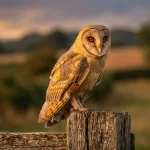
When you think about owls, you might envision their silent flight and mysterious presence. The barn owl, with its distinctive heart-shaped face and ghostly appearance, is no exception. Understanding the size and wingspan of this remarkable bird not only deepens our appreciation for it but also enhances our ability to identify and observe them in the wild. Typically measuring around 18 inches in length with a wingspan of up to 3.5 feet, barn owls are both awe-inspiring and unique in their adaptations. Whether you’re a budding birdwatcher or a seasoned naturalist, knowing the dimensions of the barn owl can provide valuable insights into its behavior, habitat, and hunting prowess. Join me as we explore the fascinating world of barn owls and discover what makes their size so significant in the avian realm.
Understanding Barn Owl Size and Characteristics
The Barn Owl, a beacon of elegance in the avian world, captivates bird watchers with its distinctive heart-shaped face and striking plumage. With a body length averaging between 32 to 40 cm (13 to 16 inches), these owls are medium-sized compared to other species. Males typically range from 32 to 38 cm (12.6 to 15.0 inches), while females, being larger, measure about 34 to 40 cm (13.4 to 15.7 inches) [2]. Understanding the characteristics of the Barn Owl goes beyond its dimensions; it encompasses its behavior, habitats, and adaptability.
A notable feature of the Barn Owl is its impressive wingspan, which generally ranges from 80 to 95 cm (31 to 37 inches). This expansive wingspan contributes to its graceful flight, allowing it to glide silently through various landscapes. This silent flight is essential for hunting, as these owls primarily rely on their acute hearing and exceptional night vision to locate prey, typically small mammals like rodents. When observing a Barn Owl in the wild, the contrast between its soft, muted feathers and the night sky can create an almost ethereal sight, further enhancing its allure.
The size and characteristics of Barn Owls can vary significantly based on their region and environment. For instance, Barn Owls found in wetter climates may exhibit slightly larger body sizes compared to those in dry regions, as they often adapt to their surroundings for optimal hunting efficiency. This variability across different habitats showcases the Barn Owl’s remarkable capacity for adaptability, enabling it to thrive in diverse settings around the world. Observing these magnificent creatures in their natural habitats presents an extraordinary opportunity for both beginner birders and seasoned enthusiasts alike, fostering a deeper appreciation for this extraordinary species.
Wingspan Measurements: What to Expect
The Barn Owl’s wingspan is one of its most striking features, often measuring between 80 to 95 cm (31 to 37 inches). This impressive span not only contributes to their elegance but also plays a vital role in their hunting technique. When gliding silently over fields or marshes, these owls can cover significant ground, maximizing their efficiency in locating prey. The wide wings help them soar gracefully with minimal disturbance, essential for sneaking up on small mammals like voles and mice that they rely on for food.
Understanding the variability in wingspan related to various factors can enhance your bird-watching experience. In general, Barn Owls from different regions may exhibit slight differences in size and, consequently, wingspan. For instance, those inhabiting more humid areas often tend to be larger, a characteristic that likely aids their hunting abilities in dense vegetation where agility is crucial. This adaptability is one of the many fascinating aspects of Barn Owls and illustrates how morphology can be influenced by environmental conditions.
If you’re fortunate enough to spot a Barn Owl, pay attention to the differences in its flight compared to other species. While many owls flap their wings frequently, Barn Owls often glide for long stretches, using their wings’ large surface area to stay aloft with minimal effort. This behavior not only showcases their physical prowess but also underscores their role as skilled nocturnal hunters. For bird watchers, recognizing these patterns in flight can be instrumental in identifying and tracking Barn Owls in the wild.
When measuring a Barn Owl’s wingspan accurately, position yourself at a distance where you can comfortably view its full silhouette when perched. If the owl is in flight, note that a clearer perspective will help you appreciate the beauty of its wings as they stretch wide against the sky. Remember to observe quietly; a sudden noise can startle these sensitive creatures, disrupting their natural behaviors. Enjoy each sighting, as witness to such grace in motion is a privilege for any bird enthusiast.
Comparing Barn Owl Sizes to Other Owl Species
When comparing sizes among owl species, the Barn Owl stands out as a compelling subject due to its unique features and elegance. Generally categorized as a medium-sized owl, the Barn Owl boasts a wingspan that ranges from 80 to 95 cm (31 to 37 inches), which is quite impressive compared to other owls. For instance, the Great Horned Owl, a larger species, can have a wingspan of up to 152 cm (60 inches), while smaller owls such as the Eastern Screech Owl have a wingspan that ranges only from 61 to 66 cm (24 to 26 inches). This variance in size among species illustrates the incredible adaptability of owls to their ecological niches.
In terms of weight, Barn Owls typically weigh between 300 to 600 grams (10.5 to 21 ounces). This puts them in the lighter category when compared to mighty owls like the Snowy Owl, which can weigh between 1.6 to 2.7 kg (3.5 to 6 pounds). This weight difference significantly influences their hunting strategies and prey preferences. While the lighter Barn Owl excels at hunting small mammals in open fields due to its silent flight and agility, larger owls often target larger prey, necessitating different hunting techniques and habitats.
Another important aspect to consider is the heart-shaped facial disc of the Barn Owl, which is notably distinct from that of many other owl species. This feature not only contributes to its striking appearance but also aids in sound localization-an essential skill for hunting in the dark. When observing Barn Owls alongside other species such as the Barn Owl’s relative, the Tawny Owl, one notices that the Tawny Owl has a rounder face and a more robust appearance, which directly correlates with its different hunting behaviors and habitat preferences.
Understanding these size differences-both in wingspan and body mass-can enhance your birdwatching experience. Keen observers often find it helpful to familiarize themselves with the various characteristics that differentiate these majestic birds, such as size, habitat, and hunting styles. This knowledge not only enriches the joy of watching them in the wild but also sharpens one’s abilities to identify these fascinating creatures more accurately. Whether you are a beginner or an experienced birder, appreciating the diversity among owl species can lead to rewarding encounters in their natural settings.
The Impact of Region on Barn Owl Size
Barn Owls are fascinating creatures, and one of the intriguing aspects of their biology is how size can vary depending on their region. This size variation is influenced by several factors, including environmental conditions, available food resources, and genetic adaptations. For example, Barn Owls found in warmer, open habitats like the southern United States may develop slightly larger wingspans compared to their counterparts in cooler, denser forests of northern climates. Such adaptations can enhance their hunting efficiency, allowing them to cover more ground while searching for prey.
Interestingly, size differences can also be seen between different subspecies of Barn Owls. In Europe, for instance, the Tyto alba species tends to be larger overall compared to those found in Southeast Asia, where the warmer climate and abundant food sources might support less robust growth. These regional adaptations not only showcase the remarkable versatility of Barn Owls in responding to their environments but also offer valuable insights into their ecological roles in diverse ecosystems.
Additionally, geography plays a crucial role in prey availability, which directly influences the growth and size of Barn Owls. In areas where small mammals abound, Barn Owls may thrive and exhibit a size that reflects their efficient foraging capabilities. Conversely, in regions with less prey availability, these owls may not reach the same size due to nutritional limitations. Bird watchers and enthusiasts should take note of these regional differences, as they offer a richer understanding of Barn Owl behavior and habitats across the globe.
By acknowledging these regional variations, birdwatchers can enhance their observations, tailoring their expectations based on the specific location and context. Understanding how the environment shapes the size and behavior of Barn Owls not only deepens our appreciation of these elegant birds but also underscores the importance of conserving their habitats to ensure their continued survival and adaptability.
Age and Size: How Young Barn Owls Grow
Young Barn Owls are remarkable creatures, and observing their growth offers fascinating insights into their development. From the moment they hatch, these chicks are covered in a fluffy down, primarily white and gray, providing them with a unique appearance that evolves as they mature. One of the most striking aspects of Barn Owl growth is the rapid change in size and feathering over a relatively short span of time. Initially, they are helpless and rely heavily on their parents for food, which typically consists of small rodents.
At around two weeks of age, Barn Owl chicks begin to develop their flight feathers, marking a critical phase in their growth. By the time they reach approximately six weeks, they are often nearly the same size as adult owls, though they still retain their juvenile plumage. This rapid growth is influenced by the nutritional quality and quantity they receive from their parents, underscoring how important it is for young owls to have access to adequate prey in their environment.
As they approach fledging-usually around eight to ten weeks old-young Barn Owls display a mix of juvenile and adult traits. They grow their distinctive heart-shaped faces and begin practicing their flight skills, albeit clumsily at first. It’s crucial to note that while they may appear large, their body mass is still developing; typically, females reach a larger size than males, continuing a trend seen in many raptor species.
For those keen on birdwatching or studying these fascinating birds, noting the differences in feathering and behavior can help in identifying young Barn Owls. Juveniles tend to be slightly more vocal and are often seen begging for food, emphasizing their dependence on parental care. This early life stage is vital not only for their survival but also for understanding the broader ecological effects of their populations. Engaging in these observations not only enriches your knowledge but also helps in appreciating the journey these owls undertake from fragile chicks to formidable hunters of the night.
Female vs. Male Barn Owl Size Differences
The fascinating world of Barn Owls reveals a significant aspect of their biology: the size differences between females and males. Generally, when you encounter these elegant creatures, you’ll notice that females tend to be larger than males, which is a common trait among many raptors. This size disparity plays an essential role in their ecological niche and behaviors. Adult female Barn Owls average about 25-28 inches in length with a wingspan reaching up to 39 inches, while males typically measure around 22-24 inches long, with a wingspan closest to 36 inches. This variation not only aids in reproductive roles but also influences hunting strategies, as the larger size of the female allows her to take down slightly larger prey.
Understanding these size differences can be incredibly useful for birdwatchers and researchers alike. For example, if you’re trying to identify a Barn Owl in the wild, noting the size and shape can provide critical clues. Females often have a more robust appearance, showcasing wider wings and a thicker body compared to their slender male counterparts. Furthermore, the coloration can also give hints-while both sexes share the distinctive heart-shaped face and mottled feathers, females often exhibit richer, more vibrant tones, especially during the breeding season.
Behavioral Implications of Size
The size distinction affects behavior as well. Males, being smaller, can be more agile in flight, allowing them to navigate through tight spaces while hunting or evading predators. In contrast, the larger females possess a greater strength, which can be advantageous when defending the nest or during territorial displays. Both sexes exhibit unique vocalizations that can signal their size; for instance, the calls of females can be deeper and more resonant, while males may produce higher-pitched sounds.
When it comes to breeding, the physical size difference allows females to carry and care for larger clutches of eggs. Typically, a female Barn Owl can lay anywhere from 2 to 18 eggs, and her larger size helps support this reproductive investment. Thus, when observing Barn Owls, take a moment to appreciate not just their beauty but also how their sizes and roles interconnect within their shared environment. Recognizing these differences enhances your field experience and deepens your understanding of these remarkable nocturnal hunters.
Common Myths About Barn Owl Size
The allure of Barn Owls often sparks curiosity, but with it come a slew of misconceptions about their size. One common myth is that all Barn Owls are relatively giant birds of prey. In reality, these owls are medium-sized, typically measuring between 32-40 cm (13-16 in) in length, with a wingspan that can reach up to 39 inches in females and around 36 inches in males[2]. This highlights that while they have a formidable wingspan, their overall size is more modest compared to other raptors.
Another frequent misunderstanding is that Barn Owl size is uniform across different regions. This is far from accurate; while certain traits may be consistent, size can vary significantly based on geographical location and available prey. For instance, Barn Owls in areas with larger prey tend to grow slightly larger than their counterparts in regions with smaller prey availability. This adaptability reflects their evolutionary strategies and environmental factors rather than a strict rule about their growth[1].
Some birdwatchers mistakenly believe that size alone can aid in species identification. While size plays a role, it should be combined with other characteristics, such as the owl’s heart-shaped facial disc and plumage patterns. Females often appear bulkier, especially during breeding season when they exhibit richer colors, but this can sometimes be misleading without the proper context[3].
Debunking these myths enhances our appreciation for Barn Owls and their ecological roles. When observing these magnificent creatures, it’s essential to focus on their unique attributes and behaviors instead of preconceived notions about size. This approach not only enriches our understanding but also encourages a more profound respect for these incredible nocturnal predators.
How to Measure a Barn Owl Accurately
Determining the size of a Barn Owl can be both fascinating and crucial for ornithologists, birdwatchers, and nature enthusiasts alike. To measure a Barn Owl accurately, it’s essential to approach the task with care and the right techniques. Barn Owls come with a slightly varied size range, generally measuring between 32-40 cm (13-16 inches) in length, and it can be intriguing to establish where your individual bird fits into this spectrum.
To begin measuring a Barn Owl, it’s best to have the owl gently restrained, ensuring minimal stress for the bird. Always remember to prioritize the well-being of the owl. Using a soft measuring tape is advisable as it can easily conform to the bird’s body. Measure the following parts for a comprehensive understanding of the owl’s dimensions:
- Overall Length: Measure from the tip of the beak to the tip of the tail. This gives you the standard body length.
- Wingspan: To measure this, extend the wings fully and measure from the tip of one wing to the tip of the other. You can use a ruler or a measuring tape for accuracy.
- Weight: Use a sensitive scale-preferably one that can measure in grams-to ascertain the owl’s weight, which can vary between males and females.
When estimating size, it’s beneficial to compare the measurements with known standards from the specific Barn Owl population you are observing. For instance, females tend to be heavier and larger, averaging about 350 grams, while males usually weigh around 330 grams. Understanding these averages will help you determine if your observations align with typical measurements.
Aside from physical measurements, consider the individual characteristics of the Barn Owl that might affect size perception. Plumage density or health status, for example, can affect how robust an owl appears. Additionally, always take geographic variation into account-Barn Owls from different regions may grow to different sizes based on their habitats and the availability of prey. Thus, measuring accurately not only provides insights into the individual owl but also contributes to broader ecological understanding.
Measuring a Barn Owl not only enhances your identification skills but also connects you deeper to the behavior and intricacies of this remarkable species. Observing these details in the field can truly enrich your experience as a birdwatcher while fostering respect for the natural world around us.
Behavioral Traits Influenced by Size
The size of a Barn Owl significantly influences its behavior, adaptation strategies, and interactions with the environment. Observing these traits can provide valuable insights into their overall ecology and survival tactics. Larger Barn Owls, because of their increased mass and wingspan-averaging up to 95 cm (37.4 inches)-are often more capable of covering larger territories in search of food. This territoriality can lead to a more pronounced display of behaviors such as vocalizations and courtship rituals, especially during breeding seasons, helping them establish dominance over feeding grounds.
In contrast, smaller Barn Owls might exhibit more cautious behavior, allowing them to exploit niches within the environment that larger owls may overlook. This can include hunting at different times of the night or targeting smaller, more elusive prey. The differences in size often correlate with hunting techniques as well; for instance, larger individuals might use their strength to tackle bigger prey, while their smaller counterparts may specialize in capturing smaller rodents and insects. Such behavioral adaptability is crucial not only for their feeding success but also for rearing their young, as optimal foraging connects directly to the energy available for raising chicks.
Furthermore, size can play a role in the social structure of Barn Owl populations. Larger females may assert themselves more confidently in nesting sites, allowing them better access to resources during the breeding season. In contrast, males, being slightly smaller, may need to demonstrate agility and stealth to attract mates. Understanding these behavioral traits linked to size helps birdwatchers and ornithologists create a more holistic picture of Barn Owl dynamics, ultimately enhancing the appreciation of their ecological roles.
By observing these behaviors in the field, enthusiasts can not only identify and appreciate the nuances of the Barn Owl’s life but also understand the intricate balance that these remarkable creatures maintain with their environment.
Conservation Status and Its Effect on Size
The conservation status of the Barn Owl is not just a number-it has tangible effects on their physical characteristics, including size. As habitats are altered and food sources dwindle due to urbanization and agricultural practices, the health and growth of Barn Owl populations can change significantly. While a healthy population can maintain a robust size range, those facing environmental pressures may exhibit stunted growth, reduced weights, or even altered wing spans. Understanding these dynamics is crucial for appreciating how conservation efforts can influence not only the survival of these beautiful birds but also their physical development.
One of the most telling examples of this is found in regions where conservation initiatives have successfully restored wetland habitats, which are critical for small mammal populations that Barn Owls rely upon for food. In these revitalized areas, we observe healthier Barn Owl sizes, averaging a greater wingspan and weight compared to those in degraded environments where food scarcity prevails. The availability of nutritious prey significantly impacts their ability to reach optimal growth, emphasizing the intricate relationship between conservation status and size.
Moreover, the effects of conservation extend to behavioral changes linked to size. A physically larger Barn Owl, well-fed by ample prey, may exhibit more territorial behavior that can lead to greater breeding success. In contrast, smaller individuals in impoverished habitats may adopt a more furtive lifestyle, honing their hunting skills in ways that allow them to survive with less; they might sift through crevices under debris where larger owls cannot venture.
To mitigate the challenges faced by Barn Owls, habitat protection and restoration are essential. Recognizing the signs of a healthy population-such as increased size and successful breeding pairs-can guide conservation efforts effectively. If we work to implement conservation practices that prioritize habitat integrity and create favorable foraging conditions, we foster not only the survival of Barn Owls but also promote their thriving through optimal size and health, enhancing their role in local ecosystems.
In summary, the interplay between conservation status and the physical characteristics of Barn Owls underscores the importance of our efforts to protect them. By observing and studying these relationships, we can make informed decisions that bolster efforts aimed at safeguarding these remarkable creatures for future generations.
Captive Barn Owls: Size Variations in Domestication
Captive Barn Owls often display a fascinating range of size variations that can surprise both novice bird enthusiasts and seasoned avian experts. Unlike their wild counterparts, which typically exhibit a consistent wingspan of about 28 to 34 inches and weight ranging from 1.5 to 2.5 pounds, those bred in captivity can present notable differences influenced by diet, environment, and genetics. In captivity, these owls may grow larger due to regular feeding schedules and absence of environmental stresses.
For instance, owls in a controlled environment can achieve weights at the higher end of the spectrum, sometimes exceeding 2.5 pounds. This is particularly evident when captive breeding programs prioritize nutrition, allowing these birds to thrive and potentially reach sizes beyond what is typical in the wild. Proper care has a critical role in this growth; a balanced diet rich in protein, such as rodents and specially formulated pellets, can support their physical development.
Maintaining a suitable habitat is equally essential. Captive Barn Owls require spacious enclosures to enable natural behaviors, including flying and hunting exercises. This not only affects their physical growth but also their psychological well-being. Here are some factors to consider when caring for captive Barn Owls that may influence size:
- Diet: High-quality, diverse food sources are crucial for optimal growth.
- Space: Offering ample flying room helps develop strong muscles and healthy wing spans.
- Health Care: Regular check-ups can ensure that any underlying health issues affecting growth are addressed promptly.
- Breeding Influence: Selective breeding can enhance desired traits, though it may also lead to variability in size among offspring.
Observation of size differences in Barn Owls kept in captivity can also foster conversations regarding their conservation. While larger individuals may be more expressive and visibly stunning to onlookers, understanding the delicate balance of health and size is paramount. By prioritizing their care, we can appreciate not only their beauty but enhance their role within captive breeding programs aimed at species preservation.
In essence, the variations observed in captive Barn Owls can serve as a reflection of the environment in which they are nurtured. These majestic birds teach us invaluable lessons about the importance of proper care and the intricate relationship between habitat, size, and health.
Tips for Spotting and Identifying Barn Owls
Spotting a Barn Owl can be an exhilarating experience, especially considering their stunning appearance and unique behaviors. These medium-sized owls, often characterized by their striking heart-shaped faces and ghostly white plumage, usually have a wingspan ranging from 28 to 34 inches. When looking to identify these beautiful birds, there are a few important aspects to consider that go beyond just their size.
To begin with, timing and habitat are key. Barn Owls are primarily nocturnal hunters, preferring to hunt at dusk and dawn. They are often found in open habitats including grasslands, farmlands, and near water. When searching for them, look for locations where they can easily glide, such as fields dotted with low shrubs or woodlots. Barn Owls tend to roost in tree cavities, barns, or other high vantage points, so check these spots during the quieter hours when they are not actively hunting.
When it comes to physical characteristics, pay attention to their distinctive features and behaviors. Barn Owls have long, rounded wings which contribute to their buoyant, silent flight, essential for hunting small mammals like rodents. Their facial disc, which helps funnel sound to their ears, is typically pale with dark markings. Being aware of these traits can be very helpful, especially when comparing them to other owl species that may share their habitat but differ in size and design.
It’s also useful to familiarize yourself with their calls and vocalizations. Barn Owls are known for their eerie, raspy screeches, which can often be heard at night. Unlike many other owls that hoot, Barn Owls produce a series of hissing sounds that can reveal their presence even when they are out of sight. Recording and recognizing these calls can significantly enhance your birdwatching experience.
In conclusion, spotting and identifying Barn Owls involves a mix of understanding their preferred habitats, physical characteristics, and sounds. By tuning in to the right time, place, and features, you can enhance your chances of observing these captivating birds in their natural environment. Happy birding!
FAQ
Q: What is the average size of a Barn Owl?
A: The average Barn Owl measures about 12 to 24 inches in length, with a wingspan ranging from 31 to 37 inches. This size makes them one of the more recognizable medium-sized owls. For detailed comparisons, refer to the section on “Comparing Barn Owl Sizes to Other Owl Species” in our article.
Q: How does the wingspan of a Barn Owl compare to a human?
A: A Barn Owl’s wingspan of up to 37 inches can be wider than the average human arm span, which is typically around 60 inches for adults. Despite this, Barn Owls appear leaner in flight due to their slender bodies. Check out our section on “Wingspan Measurements: What to Expect” for more insights.
Q: Do Barn Owls grow continuously throughout their lifespan?
A: Barn Owls reach their full size by the time they are about 10 weeks old, and after this period, their growth largely stabilizes. Factors like diet and habitat can influence size variations in adulthood. Learn more in our “Age and Size: How Young Barn Owls Grow” section.
Q: Are there size variations between different Barn Owl subspecies?
A: Yes, Barn Owl subspecies can show size variations based on regional adaptations. For instance, those in warmer climates may be smaller compared to those in colder regions. More details can be found in “The Impact of Region on Barn Owl Size.”
Q: What factors influence the size of Barn Owls?
A: Several factors affect Barn Owl size, including genetics, food availability, and environmental conditions. A healthy diet rich in small mammals typically promotes optimal growth. See our section on “Common Myths About Barn Owl Size” for a deeper understanding.
Q: What is the largest recorded size of a Barn Owl?
A: The largest recorded Barn Owls have been noted to reach lengths of around 24 inches and wingspans approaching 40 inches, though these measurements are exceptional. For more on size variability, refer to “Female vs. Male Barn Owl Size Differences.”
Q: Can Barn Owls be accurately measured in the wild?
A: Measuring Barn Owls in the wild requires care; using a handheld laser rangefinder can provide accurate measurements without impacting the bird. Our article’s “How to Measure a Barn Owl Accurately” section offers useful tips for proper techniques.
Q: How do size and wingspan affect Barn Owl hunting behavior?
A: The size and wingspan of a Barn Owl are crucial for their hunting efficiency, enabling them to glide silently and cover ground effectively while searching for prey. Discover more about this in “Behavioral Traits Influenced by Size.”
Feel free to explore our detailed sections for additional insights on Barn Owls, and don’t hesitate to engage with more bird-related content!
Concluding Remarks
Understanding the size and wingspan of barn owls reveals not only their stunning appearance but also their unique adaptations for hunting. With this knowledge, you’re better equipped to appreciate these remarkable creatures and their role in our ecosystems. Don’t miss out on learning more about barn owl behavior and their conservation needs-check out our detailed guides on owl identification and habitat preservation.
Ready to dive deeper? Subscribe to our newsletter for expert tips on birdwatching and updates on your favorite avian species. If you’re passionate about birds, exploring related articles on owl care and feeding habits can further enhance your experience. Your journey into the fascinating world of barn owls doesn’t have to end here-keep discovering and engaging with the wonders of wildlife. Share your thoughts in the comments below and let us know what you’d like to learn next; your insights are invaluable to our community!
Get our latest guides, news, and insights highlighted in your Google Search & AI Overviews.