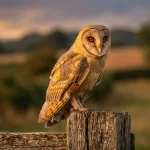
Did you know that owls are equipped with some of the largest eyes in relation to their body size among all bird species? This remarkable adaptation is essential for their nighttime hunting strategies, enabling them to see in extremely low light conditions. Understanding why owls have such large eyes not only unveils the mysteries of these fascinating creatures but also highlights the significant role that vision plays in their survival. As you delve into the intricate world of owl vision adaptation, you’ll discover how these powerful eyes enhance their predatory skills, offering insight into the connection between anatomy and environment. Whether you’re a passionate birdwatcher or simply curious about wildlife, uncovering the secrets of owl vision promises to enrich your appreciation for these magnificent nocturnal hunters. Join us as we explore the science behind their exceptional eyesight and the evolutionary benefits it provides in the wild!
Why do owls have such large eyes? Owls have enormous tubular eyes—accounting for up to 5% of their entire body weight—to maximize low-light photon collection during nocturnal hunting. Held permanently fixed in place by rigid bony sclerotic rings, their large retinas are packed with light-sensitive rod cells and backed by a reflective tapetum lucidum rather than spherical eyeballs.
Why Do Owls Have Such Large Eyes? Nocturnal Vision Anatomy
If you have ever observed an owl up close, you immediately notice its disproportionately massive, forward-facing stare. Understanding why do owls have such large eyes reveals a masterclass in evolutionary optical engineering, designed specifically to dominate the nocturnal predation niche.
An owl’s visual system differs fundamentally from human and typical avian ocular anatomy in several critical ways:
- Elongated Tubular Structure: Owl eyes are not spherical globes; they are elongated tubes. This cylindrical architecture extends the focal length, acting like a telephoto lens that projects a larger, sharper image onto the retina.
- Bony Sclerotic Rings: Because of their tubular shape, an owl’s eyes cannot rotate inside their sockets. They are anchored immovably into the skull by bony structures called sclerotic rings.
- Compensatory 270-Degree Neck Rotation: To scan their surroundings without moving their bodies, owls have 14 cervical vertebrae (twice as many as humans) and specialized vascular pools that allow neck rotations of up to 270 degrees without restricting blood flow to the brain.
- Extreme Rod Cell Density & Tapetum Lucidum: An owl’s retina contains up to 90% rod cells (photoreceptors sensitive to dim light) and a reflective layer behind the retina (the tapetum lucidum) that bounces unabsorbed light back through the photoreceptors a second time.
| Optical Feature | Owl Vision (Nocturnal Predator) | Human Vision (Diurnal Primate) |
|---|---|---|
| Eye Shape | Rigid elongated tubes | Flexible spherical globes |
| Eye Mobility in Socket | Fixed (0° movement within socket) | Mobile (up to 50° voluntary rotation) |
| Retinal Photoreceptor Ratio | Predominantly rods (>90% rods for night sensitivity) | Balanced rods and cones (color and fine daytime acuity) |
| Head Rotation Range | 270° horizontal rotation (14 neck vertebrae) | 180° horizontal rotation (7 neck vertebrae) |
For more insights into owl species and their specialized ground habits, read our detailed analysis on burrowing owl conservation and ground nesting.
Why Large Eyes? The Physics of Owl Vision
Owls, with their captivating and oversized eyes, are a marvel of nature and a testament to the incredible adaptations that have evolved to enhance their predatory skills. These large eyes play a crucial role in their exceptional ability to see in low-light conditions, making them formidable hunters during the twilight hours and throughout the night. But what is it about these eyes that allows owls to thrive in such challenging environments?
Owls possess a unique ocular structure that maximizes the amount of light entering their eyes, which is vital for their nocturnal lifestyle. Their eyes are not only large; they are also tubular in shape, providing them with a greater surface area for light capture compared to spherical eyes. This shape, combined with a high ratio of rod cells-cells in the retina that are highly sensitive to light-enables owls to detect even the faintest glimmers of movement in the dark. Essentially, their large eyes enhance their vision sensitivity, allowing for remarkable night vision and the ability to spot prey from great distances.
Moreover, the positioning of their eyes adds to their visual proficiency. Unlike many other birds that have eyes positioned on the sides of their heads, owls have forward-facing eyes, similar to humans. This arrangement grants them binocular vision, which is essential for accurately judging distances-a critical component when swooping down to capture an unsuspecting mouse or other small prey. The larger the eye, the greater the depth of field, making it easier for these birds to make swift and precise movements in pursuit of their target. As a result, when you observe an owl in its natural habitat, remember that its captivating gaze is not just for show; it is a finely tuned instrument for survival.
Types of Owls and Their Eye Sizes
The astonishing eye sizes of owls reflect their evolutionary adaptations that are honed for nocturnal hunting. Not all owls flaunt the same size eyes, and this variability corresponds to their hunting habits and environmental preferences, thus creating a fascinating spectrum of species. Take, for instance, the Great Horned Owl, easily recognized by its tufted ear-like feathers and striking yellow eyes. These eyes are relatively large, allowing it to detect movement in low light-this owl can hunt effectively during the twilight hours, capitalizing on its formidable vision.
In contrast, the Burrowing Owl, a much smaller species that occupies open grasslands and desert environments, has large eyes proportionate to its body size, designed for spotting prey from a distance. Interestingly, these eyes are also positioned for excellent forward vision, enabling precise distance judgment-essential when it dives for small mammals or insects. The eye size of burrowing owls is adapted to their lifestyle, showcasing that the correlation between eye size and hunting strategy isn’t just about dimension; it’s about optimization for survival in diverse habitats.
Table of Owl Species and Their Eye Sizes
| Species | Approximate Eye Diameter | Primary Habitat | Hunting Style |
|---|---|---|---|
| Great Horned Owl | 5 cm | Forests, urban areas | Ambush from perches |
| Burrowing Owl | 4 cm | Open grasslands, deserts | Ground foraging |
| Snowy Owl | 6 cm | Tundra, arctic regions | Active hunting |
| Eastern Screech Owl | 3 cm | Woodlands, suburbs | Nighttime ambush |
While most owl species share the characteristic of large eyes, their specific adaptations vary, revealing intricate connections between vision and ecological niche. For birding enthusiasts, recognizing these differences enriches the experience. Observing how eye size influences hunting and behavior can ignite curiosity about natural selection and the ways animals have evolved unique traits to thrive in their environments. Keep an eye out next time you’re out in the field; those captivating gazes hint at the secret worlds of these captivating birds.
Night Vision: How Owls See in the Dark
Owls are master nocturnal hunters, and their remarkable ability to see in the dark is one of nature’s most fascinating adaptations. With their large eyes-often larger in proportion to their body than those of any other bird-owls possess a unique visual system that allows them to excel in low-light conditions. Unlike humans, who rely on both cone and rod cells to perceive color and detail, owls primarily rely on rod cells, which are more sensitive to light. This means that while they may not perceive colors as vividly, their night vision is unparalleled, enabling them to hunt effectively under the cover of darkness.
The structure of an owl’s eyes significantly contributes to this incredible night vision. These eyes are not only large but also tube-shaped, allowing for a greater collection of light. This design optimizes their ability to gather as much available light as possible, enhancing their vision significantly at night. Additionally, owls possess a reflective layer behind the retina known as the tapetum lucidum. This layer amplifies light and creates a striking effect-when light shines on an owl’s eyes at night, they can glow eerily, indicating the efficiency of their night vision.
When observing owls in their natural habitat, it’s essential to understand how their vision plays a role in their hunting strategies. For instance, the Great Horned Owl can detect the slightest movements of prey even in complete darkness, making it one of the most formidable predators during twilight hours. Meanwhile, species like the Barn Owl have specialized hearing that complements their acute vision, allowing them to not only see but also triangulate sounds of small animals scurrying in the dark. This synergy between their senses ensures that they can hunt efficiently, making the most of their nighttime environment.
In summary, the incredible night vision of owls is a thrilling example of evolutionary adaptation, allowing these birds to thrive in conditions that would confound many other species. When you venture out to watch owls after dusk, take a moment to appreciate this remarkable adaptation that transforms the darkness into a stage for their predatory prowess. Whether you are an experienced birder or just beginning your journey, understanding how owls see in low light enhances the experience of appreciating these captivating creatures.
The Anatomy of Owl Eyes Explained
Imagine standing in a moonlit forest, where the silence is only broken by the soft rustle of leaves. Suddenly, you catch sight of an owl perched motionless on a branch, its large, luminous eyes fixed intently ahead. Owls possess some of the most remarkable eyes in the avian world, perfectly adapted for their nocturnal lifestyle. The combination of size, structure, and physiological characteristics of owl eyes plays a crucial role in their ability to hunt in darkness.
Owls have eyes that can be strikingly large in proportion to their bodies, often making up a significant portion of their overall head size. This anatomical feature is primarily beneficial for maximizing light intake. The structure of their eyes is rather unique; instead of being spherical like human eyes, owl eyes are more tubular. This elongated shape allows for a greater surface area, combining with the large pupils to gather more light, thereby improving their visibility in dim conditions. Furthermore, the eyes are immobile in their sockets, which necessitates a highly flexible neck that can rotate up to 270 degrees, enabling them to scan their environment without moving their bodies.
Enclosed within these impressive orbs is a specialized retina, rich in rod cells that enhance night vision. While humans have a mixture of rod and cone cells in their retinas-allowing us to see color and detail-owls rely predominantly on rod cells, which excel in low-light conditions. This adaptation means that while their color perception may be limited, their ability to detect movement and discern shapes in the dark is unparalleled. Additionally, the presence of the tapetum lucidum, a reflective layer located behind the retina, further amplifies their vision at night. This layer not only enhances their ability to see in dim lighting but also contributes to the eerie glow of their eyes when illuminated.
Understanding the anatomy of owl eyes can deepen our appreciation for these extraordinary birds. It allows us to witness firsthand how evolution has crafted such specialized tools, enabling them to dominate their nocturnal habitat. Whether observing a common Barn Owl or the formidable Great Horned Owl, one can truly admire the elegant functionality behind those captivating eyes, which serve as vital assets in their role as apex nocturnal predators.
Adaptations for Hunting: Large Eyes in Action
Owls are remarkable hunters, and their large eyes play a crucial role in their predatory success. This adaptation is not merely about aesthetics; it significantly enhances their ability to locate and capture prey in low-light conditions. When you observe an owl in action, you’re witnessing evolution’s handiwork-the culmination of adaptations that have allowed these birds to thrive in the nocturnal world.
One of the key benefits of an owl’s large eyes is their increased light-gathering capability. The eyes are equipped with large pupils that can open wide to maximize the amount of light entering. This feature is particularly advantageous during twilight or in dense forests where light is scarce. For instance, the Barn Owl, known for its heart-shaped face and large eyes, can detect small movements from prey, such as a mouse, from great distances, thanks to its enhanced light sensitivity. Their eyes allow them to detect subtle shifts in shadows, which often signal the presence of unsuspecting rodents.
In addition to their size, the unique structure of owl eyes contributes to their hunting efficiency. The retinas are densely packed with rod cells, which are optimized for night vision, enabling owls to see well in the dark. Unlike many birds that rely heavily on color vision, owls have adapted to prioritize movement detection over color differentiation. This adaptation allows them to track fast-moving prey in dim conditions. Moreover, the presence of the tapetum lucidum-a reflective layer behind the retina-boosts their night vision further, making their eyes glow eerily when illuminated at night.
Mastery of spatial awareness is another vital aspect of hunting that large eyes facilitate. An owl’s ability to rotate its neck almost 270 degrees compensates for the immobility of its eyes, allowing it to scan its surroundings without moving its body. This flexibility is crucial during the hunt, as it helps them keep a low profile while surveying the area for potential threats or prey. Coupled with their acute hearing, which is also adapted to pinpoint the slightest sounds, owls are equipped like not just expert hunters, but apex predators of their environment.
Owls epitomize how specialized adaptations enhance survival strategies. Their large eyes not only symbolize their mysterious allure but also represent a sophisticated evolution of hunting capabilities that has secured their place as masters of the night. Whether you’re an experienced birder or a curious newcomer, observing these adaptations in action can transform your understanding of these incredible nocturnal hunters.
Comparison: Owl Eyes vs. Other Birds
When we compare owl eyes to those of other birds, the contrast is striking and speaks volumes about their unique adaptations for life in the dark. Owls possess some of the largest eyes relative to their body size among birds, a crucial characteristic that enhances their ability to navigate and hunt in low-light conditions. This difference in eye size is not merely cosmetic; it is a reflection of evolutionary strategies tailored to specific ecological niches.
Unlike most birds, which may have rounder eyes suited for daytime vision, owls have large, forward-facing eyes that provide a wide field of view and excellent depth perception. This positioning allows them to accurately judge distances when swooping down on prey. For instance, compare the large eyes of the Great Horned Owl with the smaller, side-set eyes of a sparrow, which while effective for spotting predators, do not equate to the same level of depth perception required for successful nocturnal hunting.
Key Differences: Owl Eyes vs. Other Bird Eyes
- Size and Shape: Owls often exhibit significantly larger eyes than other birds, contributing to their heightened nocturnal vision.
- Rod Cells: The retinas of owls are predominantly composed of rod cells, specialized for low-light vision, unlike many diurnal birds that have a higher proportion of cone cells for color vision.
- Eye Mobility: Owls cannot move their eyes as other birds do. Instead, their head rotation of nearly 270 degrees compensates for this limitation, allowing them to survey their surroundings efficiently.
- Tapetum Lucidum: This reflective layer behind the retina not only enhances their night vision but makes their eyes glow in the dark, a feature less common in other bird species.
Owls also exemplify differences in behavior linked to their vision adaptations. While many birds rely on quick movements and bright colors to attract mates or signal dangers, owls capitalize on their night vision to remain stealthy and undetected by both prey and potential threats. Their hunting techniques are finely tuned to exploit their visual acuity-gliding silently through the night sky, they utilize their acute senses to detect even the faintest rustle in the underbrush.
Understanding these differences not only enriches our appreciation for owls but also enhances our overall knowledge of avian adaptations and behaviors. Whether you’re observing a majestic Barn Owl in flight or charting the behaviors of roof- nesting pigeons, recognizing these visual traits can deepen your connection to the diverse world of birds.
Cultural Significance of Owls in Mythology
Throughout history, owls have captured the human imagination, often symbolizing wisdom, mystery, and the supernatural. Cultures around the world have woven the presence of these nocturnal hunters into their mythologies, viewing their large, piercing eyes as a reflection of their unique abilities to see in the dark. For instance, in ancient Greece, the owl was associated with Athena, the goddess of wisdom and warfare. This connection led to the species, commonly known as the Barn Owl, being seen as an embodiment of knowledge and foresight, with its exceptional vision serving as a metaphor for insight into the unseen truths of the world.
In various Native American traditions, owls are often seen as guardians of sacred knowledge and spirits that guide and protect. Their enigmatic presence in the night sky has led some tribes to regard them as omens-either of good fortune or impending danger-depending on the context. This belief is deeply rooted in the owl’s ability to navigate the darkness, a trait that symbolizes the ability to navigate through life’s challenges and uncertainties.
Culturally, the eye size of owls has further fueled this symbolism. Their enormous eyes, adapted for hunting in low light, have become a metaphor for clarity and vision, leading many to associate owls with seeing beyond the surface. For example, in some African cultures, the owl is thought to possess the ability to see into the future, granting them almost mystical status. Their eyes are not just instruments of survival but have transformed into emblematic features connected to knowledge and foresight.
The way these birds have been integrated into folklore and storytelling exemplifies humanity’s deep-seated connection to nature and its creatures. Whether as wise counselors or ominous portents, owls highlight the often overlooked significance of adaptation in the animal kingdom, showcasing how the natural world continues to influence human thought and culture. Understanding these cultural narratives around owls not only enriches our knowledge of mythology but also deepens our appreciation for their unique adaptations, particularly their large, expressive eyes, which have fascinated and inspired humans for generations.
Eye Health: Caring for Your Pet Owl
Caring for the eye health of your pet owl is crucial, as their large eyes are not just a striking feature but essential for their survival and well-being. These magnificent birds rely heavily on their vision, particularly for hunting and overall navigation of their environment. Ensuring that their eyes remain healthy can significantly enhance their quality of life, so it’s important to be mindful of factors that can affect their vision.
Regular examinations by a veterinarian who specializes in avian care are vital. These professionals can detect conditions like corneal ulcers, cataracts, or infections early on. You should also observe your owl’s behavior. Owls exhibiting signs of squinting, watery eyes, or changes in hunting behavior may be indicating eye problems. A diet rich in necessary nutrients can also support eye health. Ensure your owl receives a well-balanced diet, which may include high-quality pellets, fresh vegetables, and proteins. Supplements rich in omega-3 fatty acids and vitamins A and E can contribute to maintaining optimal eye health.
Creating a suitable habitat is equally important. Owls thrive in environments that mimic their natural habitats, which should include areas they can explore with varying light conditions. Providing proper environmental enrichment-such as perches at different heights and structures to navigate-can prevent stress and promote healthy eye function. Additionally, consider the lighting in their enclosure. Too much direct light can be damaging to their sensitive eyes, while too little can impede their ability to adjust to darker conditions.
Lastly, it’s essential to be aware of potential hazards that may threaten their eye health. Objects sharp enough to injure their eyes or toxins in their environment can lead to severe consequences. Always ensure their living space is safe and free from harmful substances. By actively engaging in their care, you can help ensure that your pet owl maintains healthy and functional vision throughout its life, allowing it to thrive as the extraordinary creature it is.
Common Misconceptions About Owl Vision
Owls are often surrounded by myths about their vision that can obscure the fascinating reality of how these remarkable birds see and hunt. One common misconception is that owls can see in complete darkness. While they possess exceptional night vision, which is largely due to their large eyes and the abundant rod cells in their retinas, they still require some light to see. This means that they thrive in dimly lit environments but cannot function in total darkness, such as a moonless night. Their remarkable ability to detect even the slightest light enhances their hunting prowess, but they are not supernatural night-seers.
Another myth is that all owls have equally large eyes. Eye size and shape can vary significantly among species, reflecting their specific hunting adaptations and habitats. For instance, the Great Horned Owl possesses large, forward-facing eyes that aid in depth perception, while the Barn Owl’s more rounded eyes enhance its ability to see well in low-light conditions. It’s essential to recognize that different species of owls have evolved unique eye characteristics tailored to their particular ecological niches.
Moreover, there’s a belief that owls’ eyes can rotate entirely in their sockets. While owls can rotate their heads up to 270 degrees, their eyes are fixed due to their tubular structure, which enhances light capture but limits movement. This adaptation allows owls to have a wide field of vision without the need for moving their bodies, an advantage that proves beneficial while hunting.
Lastly, many people assume owls are colorblind. However, research suggests that some species may be capable of seeing colors, albeit differently than humans do. The presence of cones in the retinas indicates that owls may perceive a range of hues, which could assist them in distinguishing objects in their hunting grounds. This nuance underlines the importance of understanding that owl vision is tailored to their ecological roles, allowing them to thrive in their environments while challenging the common myths surrounding their extraordinary eyesight.
Understanding Color Perception in Owls
Owls possess a fascinating yet often misunderstood ability when it comes to color perception. Contrary to the popular belief that these nocturnal predators are entirely colorblind, research indicates that many owl species can perceive colors-albeit differently from humans. Unlike most birds, which have four types of color receptors, owls primarily depend on two types. This unique visual system suggests that their color vision is likely adapted for low-light conditions, allowing them to distinguish shades in the dimly lit environments where they hunt.
How Owls See Colors
The presence of cones in their retinas-the photoreceptor cells responsible for color perception-implies that owls may have a rudimentary ability to see certain wavelengths. While they may not perceive the full spectrum of colors as vividly as humans or even some other bird species do, this adaptation has significant implications for their hunting strategies. For instance, being able to differentiate between different hues could aid in pinpointing prey that might blend into their surroundings, such as a mouse hiding among fallen leaves.
Moreover, color perception in owls may also play a role in their communication and social interactions. Some species display vivid patterns on their plumage that could be perceived differently depending on the lighting conditions, which may influence mating behaviors or territorial displays. Understanding how owls interpret their world through color can deepen our appreciation for these captivating birds and their ecological dynamics.
Color Perception in Relation to Environmental Adaptations
Owls are masters of adaptation, and their color vision is just one part of a larger strategy for survival. The combination of large eyes, highly developed rod cells for detecting light, and the specific arrangement of cones creates a sophisticated visual system that is perfectly suited for their nocturnal lifestyle. This system allows them to exploit their environment efficiently, hunting during twilight and nighttime when most other predators are less active.
In practice, if you’re fascinated by owls and interested in observing their behavior, consider encouraging well-lit areas near forest edges or open fields around dusk. This way, you might not only witness these magnificent hunters in action but also gain insight into the colors and patterns that define their world, experiencing firsthand how their eyesight is finely tuned for survival in the shadows.
Behavioral Traits Linked to Eye Size
Owls are often celebrated for their strikingly large eyes, a feature that plays a pivotal role in their unique behavioral traits. These oversized eyes, adapted for low light, not only enhance their vision but also influence their hunting techniques, social interactions, and even their overall lifestyle. Owls, being predominantly nocturnal, rely on their powerful eyesight to navigate and thrive in the dark, showcasing a range of behaviors that are intricately tied to their extraordinary vision.
One of the most remarkable behavioral traits associated with their large eyes is their hunting strategy. Owls possess a keen ability to detect the slightest movements in their environment, thanks to the immense light-gathering capacity of their eyes. This enables them to remain perfectly still while waiting for prey, such as rodents or small birds, to wander into their vicinity. When they do spot potential meals, their agility and precision in swooping down, even from significant heights, are enhanced by their acute vision. For those interested in observing this extraordinary behavior, positioning yourself near open fields or woods at twilight can yield spectacular results, as you might see an owl rotating its head with fascinating fluidity-an adaptation that compensates for their eye structure, which is fixed in their sockets.
Another intriguing aspect of owl behavior related to eye size is their social dynamics, particularly in species that display territorial or mating behaviors. Many owls engage in elaborate courtship displays, which can include hooting, flying, and showcasing plumage. The large, expressive eyes of these birds serve as a focal point in these interactions, conveying various signals and emotions to potential mates or rivals. For instance, an owl may puff up and widen its eyes to appear more intimidating, which can deter intruders from encroaching on its territory.
Understanding the behavioral traits linked to large eyes can greatly enrich your appreciation of these fascinating birds. For birdwatchers and enthusiasts, recognizing how these traits influence an owl’s daily life and interactions can inform both casual observation and more focused study. Observational tips include looking for owls during dawn or dusk, as their prime hunting times align with lower light conditions, providing the opportunity to witness their remarkable adaptations and behaviors in action.
Conservation Status: Protecting Owl Species
Though owls are often admired for their remarkable night vision, their future hangs in the balance due to various threats that endanger their populations. Conservation efforts are crucial not only for maintaining their ecosystems but also for preserving the unique traits-such as their large eyes-that enable them to thrive in the dark. Habitat loss, mainly driven by urban development and agricultural expansion, poses a significant threat to these fascinating birds. It’s essential to recognize how preserving their natural habitats supports their survival and the biodiversity of entire ecosystems.
To contribute effectively to the conservation of owls, consider these practical steps:
- Support Local Initiatives: Join or donate to local wildlife organizations focused on owl conservation. Many groups work to protect habitats and implement restoration projects that benefit not only owls but also other wildlife.
- Educate Others: Share your knowledge about owls and their importance in the ecosystem. Awareness often leads to advocacy, making others more likely to support conservation efforts.
- Participate in Citizen Science: Engage in backyard birdwatching or citizen science projects that monitor owl populations. Reporting your sightings helps researchers track trends and threats.
- Maintain Natural Landscapes: If you own land, consider practices that promote wildlife-friendly environments. Planting native species, creating water sources, and minimizing pesticide use can create safer havens for owls and their prey.
Different owl species, such as the great horned owl or the barn owl, each face unique conservation challenges. The great horned owl, for example, thrives in a variety of habitats but is impacted by hunting and habitat destruction. Conversely, barn owls are particularly vulnerable to loss of suitable nesting sites and food sources, making ongoing advocacy for sustainable agriculture and preservation of old barns and trees vital. By understanding the specific needs of various owl species, we can tailor our conservation efforts more effectively.
The cultural significance of owls further amplifies the need for their conservation. Throughout history, these birds have dominated myth and folklore, symbolizing wisdom and mystery. By fostering a deep appreciation for owls in our communities, we can create a shared responsibility in ensuring their survival. As we continue to learn about their extraordinary adaptations, including their large, light-gathering eyes that allow them to thrive at night, let us also commit to protecting these remarkable creatures for future generations.
Faq
Q: Why do owls have such large eyes?
A: Owls have large eyes primarily for improved night vision. Their size allows for greater light capture, which is essential for seeing in low-light conditions. This adaptation enhances their hunting capability, enabling them to spot prey more effectively during the night.
Q: How does owl eye anatomy contribute to their vision?
A: The anatomy of owl eyes includes a high number of rod cells, which are sensitive to light. This structure, coupled with their large corneas, allows owls to gather more light, enhancing their ability to see in the dark. For a deeper understanding, refer to “The Anatomy of Owl Eyes Explained” in the article.
Q: Are all owl species equipped with large eyes?
A: While most owl species possess large eyes as a common adaptation for nocturnal life, the size can vary among different species. Factors like habitat and hunting style can influence eye size. The article discusses “Types of Owls and Their Eye Sizes” for more details.
Q: How do owls’ eyes compare to other birds?
A: Owls’ eyes are larger than those of many other bird species, which enhances their ability to see in low light. This adaptation is crucial for their hunting techniques. Compare this further with the section on “Comparison: Owl Eyes vs. Other Birds” in the article.
Q: What role do owl eyes play in hunting behavior?
A: Large eyes play a critical role in an owl’s hunting success by providing superior night vision. This adaptation allows for precise tracking of prey movements in dim light. For an in-depth look, see “Adaptations for Hunting: Large Eyes in Action.”
Q: Can owls see color?
A: Owls have limited color vision compared to humans, primarily seeing shades of blue and gray. Their eyes are adapted for detecting movement in low light rather than experiencing a broad color spectrum. Further insights can be found in “Understanding Color Perception in Owls.”
Q: How do owls’ eye movements differ from those of humans?
A: Unlike humans, owls cannot move their eyes within their sockets, which are fixed in position. Instead, they turn their heads to achieve a wide field of vision, allowing them to track prey without moving their bodies significantly. This behavior is mentioned in the article.
Q: What adaptations do owls have for low-light conditions?
A: Apart from large eyes, owls have adaptations like a reflective layer behind their retinas, known as the tapetum lucidum, which further enhances light sensitivity. This unique feature aids in low-light vision, as discussed under “Night Vision: How Owls See in the Dark.”
Feel free to explore the article for additional insights on owl vision adaptations!
The Conclusion
As we’ve uncovered, the remarkable adaptation of owls’ large eyes isn’t just a fascinating trait-it’s a pivotal element in their survival through enhanced night vision. If you’re intrigued by the mysteries of the avian world, be sure to explore our related articles on how different bird species adapt their vision and learn more about owl behavior in the wild. Don’t miss out-sign up for our newsletter to stay updated on the latest insights and tips for bird watching!
Feeling inspired? Share your thoughts in the comments below or connect with fellow bird enthusiasts to discuss your favorite owl encounters! For the curious minds ready to dive deeper, check out our comprehensive guides on nocturnal wildlife and bird conservation efforts. Let’s keep the conversation going as we continue to celebrate these incredible creatures together!
Get our latest guides, news, and insights highlighted in your Google Search & AI Overviews.