

Did you know that birds possess a unique evolutionary adaptation that allows them to hear sounds in ways we can’t even imagine? While we often think of ears as external structures, birds have specialized auditory systems that are finely tuned to their environment. Understanding how birds hear not only enhances our appreciation for these magnificent creatures but also sheds light on their complex behaviors, communication methods, and survival strategies. Whether you’re a seasoned birdwatcher or a curious beginner, exploring the fascinating world of avian hearing will deepen your connection with these incredible animals. Join us as we dive into how birds hear, what their hearing capabilities entail, and why this knowledge matters in the grand tapestry of nature.
Do Birds Really Have Ears? Understanding Avian Anatomy
Many people are surprised to learn that birds do indeed have ears, although they might not look like the ears we are familiar with in mammals. Instead of external ears, birds possess small openings on the sides of their heads, covered by feathers. These structures are known as ear openings, and they play a crucial role in how birds perceive sound. The absence of external ear flaps doesn’t hinder their ability to hear; in fact, it can make their auditory perception even more efficient in certain environments.
Bird ear anatomy is fascinatingly adapted to their lifestyles. The inner workings of a bird’s ear include a cochlea, similar to mammals, which processes sound waves. Interestingly, birds can hear a wide range of frequencies, often beyond the capabilities of human hearing. This acoustic sensitivity is essential for survival. For example, a songbird’s ability to detect high-frequency calls helps it communicate effectively in dense forests, while birds of prey utilize their acute hearing to pinpoint the faint rustle of prey on the ground.
Birds also showcase remarkable adaptation in their auditory capabilities. Certain species have more complex ear structures, which enhance their ability to discern subtle differences in sound. This is particularly evident in owls, who possess asymmetrical ear placements that allow for precise localization of sounds in their environment. The overall design of a bird’s auditory system highlights the significance of hearing in their ecological niches, facilitating essential behaviors such as foraging, mating, and evading predators. Understanding avian ear anatomy not only enriches our knowledge of their biology but also deepens our appreciation for their remarkable adaptations in the avian world.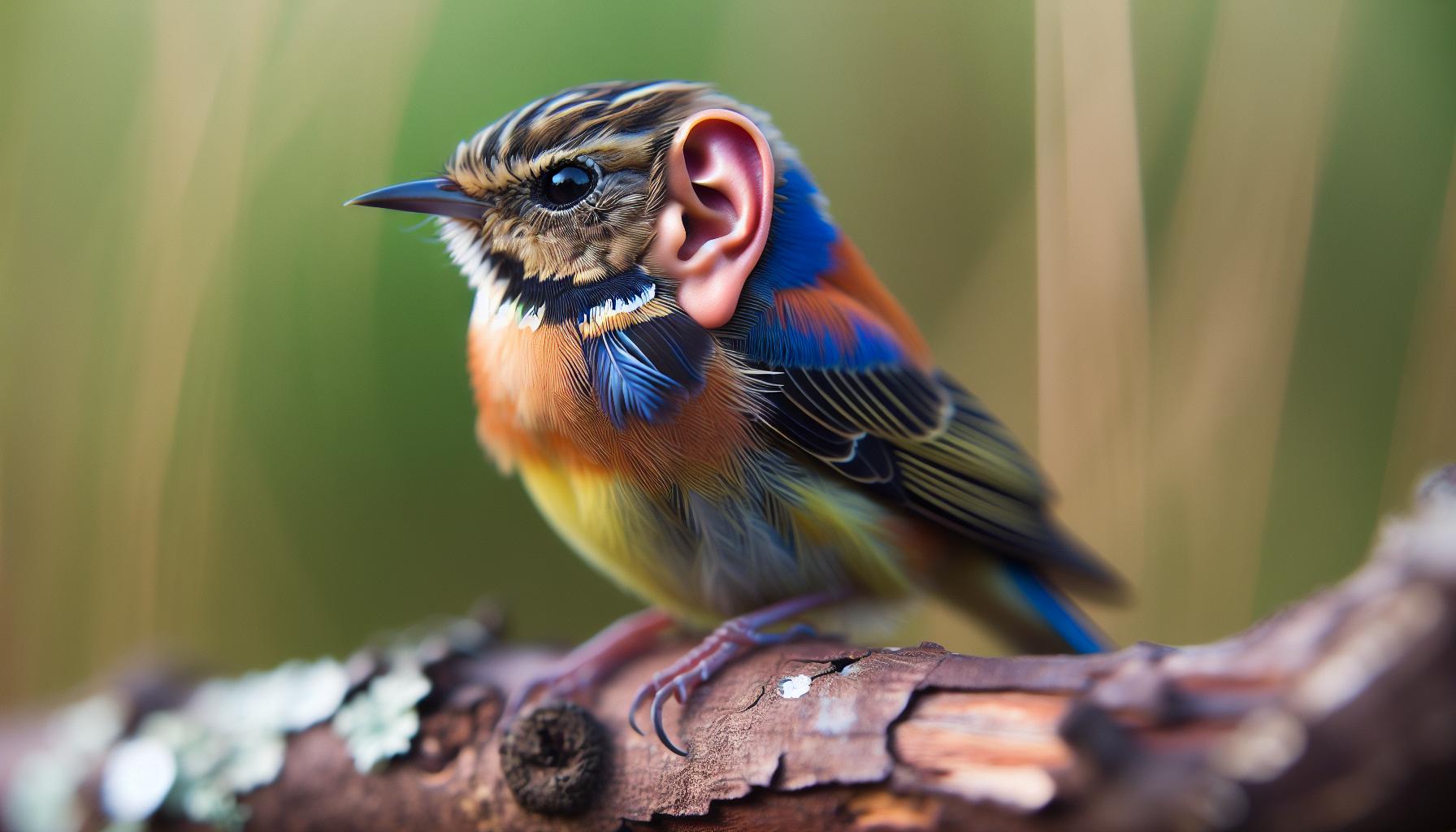
How Birds Hear: The Science Behind Their Hearing
Birds possess a remarkable adaptation for hearing that is finely tuned to their environmental needs and survival strategies. Utilizing small openings on the sides of their heads, covered by feathers, they have evolved an auditory system that compensates for the lack of external ear structures found in mammals. Interestingly, birds rely heavily on these ear openings and their intricate inner ear design, including a cochlea, to effectively capture and interpret sound waves.
The science behind avian hearing reveals that birds can detect a broad spectrum of frequencies, often exceeding human capabilities. While humans typically hear sounds ranging from about 20 Hz to 20 kHz, many birds can hear higher frequencies, with some species even able to detect ultrasonic sounds. This enhanced auditory perception allows songbirds to identify high-frequency calls crucial for communication, especially in dense vegetation, and assists birds of prey in locating subtle sounds made by potential prey on the ground.
Birds’ hearing systems are also adapted to their ecological roles. For instance, owls showcase unique adaptations such as asymmetrically placed ears, which enable them to pinpoint the exact location of sounds with remarkable precision. This ability significantly aids in hunting, especially in low-light conditions where visual cues are limited. Moreover, the structure of a bird’s ear can provide insights into its behavior and lifestyle, as species that rely heavily on auditory cues often have more refined auditory apparatus.
As you delve into bird-watching or study avian life, paying attention to these hearing capabilities can greatly enhance your understanding of their behavior and interactions. By observing how different species respond to sounds in their environment-be it the call of a mate, the alarm signals of nearby birds, or even the rustling of leaves-you can gain deeper insights into their world and the vital role hearing plays in their survival and communication.
Comparing Bird Hearing to Human Hearing: Key Differences
Understanding how birds experience sound reveals fascinating differences from human perception that highlight their unique adaptations. Birds may not have the prominent external ears we possess, yet their hearing is highly refined, allowing them to detect sounds in ways that humans cannot. While our hearing range typically extends from 20 Hz to 20 kHz, many bird species are capable of hearing much higher frequencies, making their auditory world far richer than ours. For example, songbirds can hear frequencies upwards of 4 kHz, enabling them to pick out intricate calls necessary for communication in complex environments.
Structural Differences
The structural differences in the hearing mechanisms contribute significantly to how birds perceive sound. Instead of ear flaps, birds have small openings covered with feathers, which help channel sound waves into their ear canals. This design reduces interference from wind and allows birds to focus on specific frequencies. The inner structure of their ears, such as the cochlea, is also adapted for higher sensitivity to sound frequencies. This allows species like owls, which have asymmetrically placed ears, to finely tune their ability to locate prey in low-light conditions, a skill that goes beyond human capability.
Functional Adaptations
Birds have evolved specialized auditory adaptations that align with their ecological niches. For example, ground-dwelling birds like the American Robin utilize a wider frequency range to detect rustling leaves or the faint movements of predators. In contrast, species that thrive in dense forests often listen for high-frequency sounds that can guide them in avoiding obstacles or finding mates. Such differences are rooted not only in their physical structures but also in their behaviors and survival strategies, showcasing a remarkable evolutionary response to their environments.
For bird watchers, understanding these differences in hearing can enhance the experience of observing avian behaviors. Noticing how birds react to various sounds-such as alarm calls that alert a flock to danger or the melodious songs that attract mates-provides insight into their intricate social dynamics and survival mechanisms. By tuning in to their auditory world, we can deepen our appreciation for these incredible creatures and the rich tapestry of life they navigate each day.
What Sounds Can Birds Hear? The Frequency Range Explained
Birds inhabit a vibrant acoustic world, detecting an impressive range of sounds that often goes unnoticed by human ears. While human auditory perception is typically limited to frequencies between 20 Hz and 20 kHz, many birds can hear sounds well beyond this range. Notably, some species can perceive frequencies up to 20 kHz, enabling them to communicate, navigate, and even evade predators more effectively. This unique auditory capability is not merely an adaptation; it’s an essential part of their survival strategy.
Frequency Ranges in Different Bird Species
The frequency range birds can hear varies significantly among species, influenced by their ecological niches and survival needs. For instance, songbirds, such as the American Robin, excel at hearing higher frequencies, which aids in their ability to discern between complex songs and calls, crucial for attracting mates and warding off rivals. Meanwhile, ground-nesting birds like quail have adapted to detect lower frequencies, which helps them pick up on the subtle sounds of approaching predators hidden in the underbrush.
Specialized Hearing Adaptations
Certain bird species showcase remarkable adaptations that enhance their hearing capabilities. The Eastern Screech Owl possesses asymmetrically located ears, allowing it to pinpoint the origin of sounds with astounding precision-vital for hunting in darkness. Similarly, the ability of ducks to recognize sounds from above or behind them enhances their capability to evade predators, a skill that continues to aid their survival.
Recognizing the types of sounds that birds hear can greatly enrich your bird-watching experience. Observing how a bird reacts to rustling leaves or distant calls can reveal essential insights about its behavior and social interactions. By fine-tuning our awareness of their auditory environment, we can enjoy the layers of communication that exist among our avian friends.
Whether you’re a seasoned birder or just beginning your journey, understanding the intricate world of bird hearing not only deepens your appreciation for these fascinating creatures but also enhances your ability to connect with the natural world around you.
The Role of Specialized Feathers in Bird Hearing
Birds possess a fascinating array of specialized feathers that contribute significantly to their auditory capabilities. Not only do these feathers serve the typical purposes of insulation and flight, but they also play a crucial role in how birds perceive sound. For instance, the feathers surrounding a bird’s ears can influence sound directionality, helping them to locate prey or detect potential threats in their environment.
The arrangement and structure of feathers around a bird’s head, especially those found in species such as owls and some songbirds, are particularly adapted for enhancing hearing. The Eastern Screech Owl, for example, has facial disks made up of specialized feathers that channel sound waves towards its ears. This unique feather arrangement allows the owl to pinpoint the location of sounds with remarkable accuracy, proving essential for hunting in low-light conditions.
Moreover, some birds like the Barn Owl exhibit asymmetrical ear placement, where one ear is higher than the other. Combined with the surrounding feathers that aid in sound amplification and direction, this feature enables them to detect sound differences and locate their prey even in complete darkness.
Understanding these adaptations not only enriches your knowledge of avian biology but can also enhance your bird-watching experience. Observing how different species react to their acoustic environment can reveal insights into their behavior and survival strategies. Take note of how a bird’s head might tilt or how it positions itself in relation to sound – these movements often signal their acute awareness of their surroundings and provide a glimpse into the intricate world of bird communication.
How Do Birds Adapt to Their Environments Through Hearing?
Birds have evolved remarkable adaptations that allow them to thrive in diverse environments, and their auditory capabilities are at the heart of this evolution. The ability to hear and interpret sounds is crucial for survival, enabling birds to locate food, communicate with others, and avoid predators. Whether it’s the melodic songs of a warbler during mating season or the distinct calls of a hawk signaling its territory, sound plays a vital role in a bird’s day-to-day life.
Different species of birds have developed hearing features tailored to their ecological niches. For instance, predators like owls have highly sensitive ears that can detect even the faintest rustle of prey in total darkness. Their facial discs act like satellite dishes, capturing sound waves and directing them toward their ears, allowing them to pinpoint the location of a sound with impressive precision. In contrast, many songbirds utilize their sharp hearing to navigate through their territory and interact socially. They can discern subtle variations in frequency that help them recognize the calls of other individuals and identify potential mates.
Moreover, birds living in densely vegetated areas often adjust their auditory strategies to enhance their communication capabilities. For example, on rainy days or in windy conditions, birds may alter the pitch of their calls to ensure they are still heard amidst competing sounds. This adaptability highlights how environmental factors can influence avian behavior and communication strategies. As an observer, paying attention to how birds react to their surroundings can provide insights into their acoustic environment and their survival tactics.
These adaptations to hearing are not just about survival; they affect the very fabric of bird behavior and social interaction. Observing birds as they adjust their calls or respond to their environment can greatly enrich your bird-watching experience. Are you watching a flock of sparrows flitting about, adjusting their chatter based on nearby sounds, or a solitary hawk surveying its territory? Each behavioral nuance reflects their acute awareness and ability to adapt, showcasing the incredible relationship between hearing and environment in the avian world.
Hearing Capabilities Across Different Bird Species
Birds possess an incredibly diverse range of auditory capabilities that reflect their varying lifestyles and habitats. Their hearing systems are finely tuned to detect sounds critical for survival and social interaction. For instance, owls have evolved exceptional hearing abilities that allow them to locate prey even in complete darkness. They utilize their distinctive facial discs to funnel sound waves toward their ears, enhancing their directional hearing. This adaptation is essential for hunting, as it enables them to detect the slightest movements of their prey, such as mice scuttling through the underbrush.
In contrast, songbirds exhibit a different set of auditory adaptations. These species often have a broader frequency range, allowing them to recognize complex melodies and subtle variations in calls. This capability is vital for social interaction and mate selection. For example, a male song sparrow will produce a rich tapestry of notes to establish territory and attract females. The ability to perceive these intricate patterns enhances their communication and ensures reproductive success.
Hearing Specializations Across Families
Different families of birds exhibit unique adaptations in their hearing capabilities.
- Raptors (e.g., Eagles and Hawks): Often rely on sharp eyesight but also benefit from acute hearing to detect small movements, using their ears to orient towards sounds made by potential prey.
- Woodpeckers: Possess specialized anatomical structures that protect their ears from loud drumming while still allowing them to hear the sounds made by fellow woodpeckers or potential threats.
- Waders (e.g., Herons and Sandpipers): Use low-frequency sounds to communicate over long distances, adjusting their vocalizations depending on environmental conditions.
Understanding these differences can enhance your birdwatching experience. When observing owls at night, listen closely for the slightest sounds that might precede a hunting maneuver or the melodious calls of a songbird at dusk. Not only do these auditory cues enrich your understanding of their behaviors, but they also provide critical insights into their roles within their ecosystems.
Each species responds uniquely to its environment, showcasing the intricate connection between auditory capabilities and survival strategies in the avian world. By appreciating these distinctions, both novice and experienced birders can deepen their engagement with the natural world, leading to more fulfilling observation experiences.
Impacts of Noise Pollution on Bird Hearing and Behavior
The delicate balance of nature can be significantly disrupted by noise pollution, which poses a profound threat to birds and their auditory systems. Birds are remarkably attuned to their environments, and their ability to hear plays a crucial role in communication, navigation, and survival. However, as urban areas and human activities expand, the cacophony of city life-ranging from traffic sounds to construction noise-overwhelms their natural soundscapes. This not only affects their ability to hear vital signals but also imposes stress that can lead to changes in behavior and ecology.
Research has demonstrated that noise pollution can interfere with bird communication. For instance, studies show that many species modify their vocalizations in response to background noise, often increasing the pitch or volume of their calls to be heard over the din. While this adaptation might seem effective, it can strain birds, especially during critical periods like mating season. A male bird that must call louder to be heard may expend more energy than his quieter peers, potentially leading to reduced fitness and reproductive success.
In areas heavily impacted by noise, some birds may alter their foraging habits or even abandon their habitats altogether. For example, urbanization has led certain species, such as the American robin, to shift their nesting locations to quieter spaces, often at a lower survival rate. Moreover, chronic exposure to noise can lead to stress that suppresses reproductive hormones, resulting in lower offspring production. This cascading effect illustrates how noise can disrupt not just individual species but also entire ecosystems.
To mitigate these impacts, birders and nature enthusiasts can play an important role. By supporting local conservation efforts aimed at reducing noise pollution, advocating for quieter parks, or creating natural sound barriers with native plants, we can help create more hospitable environments for our feathered friends. Engaging in bird watching during quieter hours, such as early mornings or late evenings when natural sounds peak, can also enhance the experience, allowing for better observation of bird behaviors and interactions that may otherwise be masked by noise.
Birds and Their Communication: The Sounds They Make
Birds are extraordinary communicators, each with a unique repertoire of sounds that serve various purposes-from attracting mates to warning of predators. The sounds they make are not just simple squawks or chirps; they encompass a rich tapestry of calls and songs, each carrying a specific meaning. For instance, the hauntingly beautiful song of a Western Meadowlark can signal territory ownership, while the sharp, quick tweets of a flock of starlings convey urgent messages about threats.
Understanding Bird Sounds
Bird vocalizations can be categorized into two main types: calls and songs. Calls are typically short, simple sounds used in everyday communication, signaling things like alarm, location, or social interaction within a flock. In contrast, songs are complex and melodic, predominantly used by males during the breeding season to attract females and establish territory. A classic example is the melodious tune of the American Robin, which fills the air with a variety of notes at dawn, announcing its presence to potential mates and rivals alike.
To truly appreciate the complexity of bird communication, it’s essential to consider the environmental context in which these sounds are made. For instance, some birds have adapted their calls to be more effective in particular habitats. In dense forests, birds might develop sharper, higher-pitched sounds to cut through the foliage, whereas in open fields, their calls may be deeper and more resonant. This adaptability highlights the remarkable relationship birds have with their surroundings.
How Sounds Are Produced
Birds produce sounds using a specialized vocal organ called the syrinx, located at the base of their trachea. Unlike mammals, which refine sounds through vocal cords, birds create a wider variety of tones and pitches at a remarkable speed, thanks to the unique structure of the syrinx. This organ allows for simultaneous sounds, enabling species like the Lyrebird to mimic other bird calls and even mechanical sounds from their environment.
Using bird sounds to enhance your bird-watching experience can be incredibly fulfilling. Listening attentively to different calls can help you identify species even when they’re hidden from view. For example:
- The familiar “cheer-up, cheerio” of the Eastern Bluebird.
- The sharp and quick “peep” of a House Sparrow, often found in urban areas.
- The soft coo of a Mourning Dove, which evokes a calm presence in gardens and parks.
By familiarizing yourself with these sounds, you can transform a day in nature into a rich exploration filled with bird communication insight. Whether you are a novice birder or an experienced wildlife enthusiast, paying careful attention to the sounds around you will deepen your connection with the avian world and enrich your overall experience in the great outdoors.
How to Observe and Enhance Your Bird-Watching Experience
Birdwatching is more than just spotting feathered friends; it’s an immersive experience that engages all your senses, particularly hearing. Consider this: while a hawk may soar gracefully above, it’s the subtle chirps and calls from below that can reveal hidden habitats and unexpected wildlife. To truly elevate your birdwatching experience, embracing the auditory world of birds can make all the difference. By tuning into their calls and songs, you’ll not only identify species but also gain insight into their behavior and interactions within their environment.
The first step is to get acquainted with the diverse sounds birds make. Equip yourself with a good pair of binoculars and a field guide, but don’t forget to bring your ears into play. Experienced birders often use sound as their primary identification tool, tuning into calls before spotting a single bird. Create a simple recording device or use apps designed for bird calls, allowing you to listen to and compare sounds in the field. Recognizing the common calls, such as the “tee-tee-tee” of a Chickadee or the melodic song of a Common Yellowthroat, can heighten your senses and sharpen your observational skills.
It’s also important to be mindful of your surroundings. Birds often communicate in ways that reflect their habitats. For instance, in urban areas, you might find songbirds adapting their calls to compete with the noise of traffic. This means that attending to slight variations in sound can lead you to discover how birds have uniquely shaped their communications to fit their environments. Take note of context: are the calls alarm signals, feeding requests, or mating calls? Documenting these observations can add depth to your experiences and enhance your conversations with fellow birdwatchers.
Lastly, develop a routine that incorporates listening into your birdwatching outings. Spend a few moments in silence, allowing the symphony of bird sounds to unfold around you. Each season brings different visitors and unique vocalizations, so revisit your favorite spots to track changes in the avian chorus. As you listen, think about how the birds adapt their communication styles to survive and thrive in their respective habitats. This enriched awareness will not only deepen your appreciation for birds but will also foster a more profound connection with nature, making every outing a remarkable adventure.
The Importance of Hearing in Bird Survival and Behavior
Birds possess an extraordinary auditory system that plays a crucial role in their survival and behavior. Unlike humans, whose hearing is primarily limited to a relatively narrow frequency range, birds have the ability to hear higher frequencies that are critical for communication, navigation, and predator detection. This heightened sense of hearing allows them to react swiftly to their environments, ensuring they can flee from dangers or locate mates amidst a cacophony of sounds.
Many bird species use their acute hearing to interpret their surroundings. For instance, birds like the American Woodcock rely on sound cues to locate prey hidden beneath leaf litter. This ability is not only vital for finding food but also for evading predators. Songs and calls, unique to individuals or species, convey vital information about territory, mating readiness, and alarm signals. Understanding these nuances can significantly enhance your birdwatching experience, as it opens a window into the complex social structures of avian communities.
Adaptations and Survival
Birds have developed various adaptations that enhance their hearing capabilities. Their ear placement is often far back on their heads, which helps in detecting the direction of sounds. Additionally, some species, such as owls, have asymmetrical ears, allowing them to pinpoint the location of prey in low-light conditions with remarkable accuracy. These adaptations mean that sound plays a pivotal role in the daily lives of birds, influencing their foraging strategies and mating rituals.
As humans encroach upon habitats and introduce noise pollution, the impacts become evident. Birds exposed to urban sounds may alter their calls, making them less effective for communication. This adaptation can lead to decreased breeding success and altered feeding behaviors, exemplifying the intricate link between hearing and survival. The next time you venture outdoors, pay attention to the sounds around you; they are not just background noise but a vital aspect of the life and communication of the birds you encounter.
By understanding the importance of hearing in birds, you can deepen your appreciation for their behavior and enhance your birdwatching skills. Listening more intently allows for a richer connection with nature, revealing the hidden dramas and intricate relationships that define avian life.
Fun Facts About Bird Hearing You Didn’t Know
Did you know that a bird’s ears are not what you might expect? Unlike humans, birds lack external ear structures like lobes. Instead, their ears are small openings positioned on the sides of their heads, often camouflaged by feathers. This unique adaptation allows birds to protect their delicate hearing organs while still possessing amazing auditory abilities. Here are some intriguing insights into the world of bird hearing that you might find fascinating.
Acute Sensitivity to High Frequencies
Birds excel in hearing high-frequency sounds, often up to 4 times higher than humans can detect. This heightened sensitivity allows them to hear the subtle calls and songs of their peers, which are essential for communication, mating, and territory defense. For example, many songbirds use high-pitched notes to convey emotions or signal alarm among their flock. Their ability to discern these frequencies also aids in locating predators, as even the faint rustle of leaves can indicate danger.
Directional Hearing
Birds possess a remarkable ability to pinpoint the direction of sounds. The placement of their ears facilitates this; for instance, owls have asymmetrical ear openings that allow them to detect minute differences in sound intensity and timing, letting them locate prey even in darkness. You can experience this firsthand: if you observe an owl at night, listen closely to its hoots. You may notice variations in volume and pitch, helping the owl navigate and find food under low-light conditions.
Creative Communication
Birds not only hear but also produce a vast array of sounds. From the cheerful melodies of the American Robin to the complex mimicry of the Lyrebird, each calls and songs serve essential purposes. Many species use their auditory skills to mimic sounds from their environments, like chainsaws or car alarms, to attract mates or establish territory. This behavior highlights the adaptability and intelligence of birds and can be an entertaining aspect of birdwatching.
What It Means for Birdwatchers
Understanding how birds hear can significantly enhance your birdwatching experience. When you’re out in the field, don’t just look for birds; listen for their unique sounds, as these can provide clues about their behavior and identify them even when they’re hidden. Bringing along a good pair of binoculars with sound could help you pinpoint songbirds in dense foliage, creating a richer connection with the avian world. Happy birdwatching, and may your ears be as attuned as the birds you observe!
Faq
Q: How do birds perceive sounds differently from humans?
A: Birds perceive sounds at different frequencies, often hearing higher pitches than humans can. Their ear structure allows for sensitivity to a broader range of sounds, aiding in communication and environmental awareness. Understanding these differences may enhance your bird-watching experience. Refer to “Comparing Bird Hearing to Human Hearing” for more details.
Q: Why are specialized feathers important for bird hearing?
A: Specialized feathers, particularly around the ears, help funnel sound waves to a bird’s inner ear, enhancing their ability to detect subtle noises. This adaptation is crucial for survival, as it allows birds to respond quickly to predators and mates. Explore more in “The Role of Specialized Feathers in Bird Hearing.”
Q: Can birds hear in noisy environments?
A: Yes, many birds have adapted to hear well in noisy environments like urban areas. They often rely on higher frequency sounds that are less drowned out by background noise. Learning about these adaptations can inform how you protect bird habitats from noise pollution.
Q: How does noise pollution affect bird communication?
A: Noise pollution can disrupt bird communication by masking their calls, which are essential for mating and territory defense. Birds may change their vocalizations to be heard over noise, impacting their breeding success. For insights on conservation, see “Impacts of Noise Pollution on Bird Hearing and Behavior.”
Q: What sounds can birds use for communication?
A: Birds communicate using a variety of sounds, including songs, calls, and even body language. Different species may have unique sounds to convey mating readiness or warning of danger, demonstrating the diversity in avian communication. Check “Birds and Their Communication” for fascinating examples.
Q: Can birds see the same colors humans can?
A: Birds can see a broader spectrum of colors, including ultraviolet light, which is invisible to humans. This ability aids in foraging and mate selection, as many birds use color cues that are undetectable to the human eye. For more on bird anatomy, see “Do Birds Really Have Ears?”
Q: How do different bird species hear?
A: Hearing varies significantly among bird species, with some adapted to specific environments or lifestyles. For example, owls have exceptional low-frequency hearing for hunting in darkness. Delve deeper into “Hearing Capabilities Across Different Bird Species” to understand these adaptations.
Q: Do all birds hear equally well?
A: No, hearing abilities differ among bird species based on their ecological niches and needs. Birds of prey often have acute hearing for hunting, while others may rely less on sound. Understanding these differences can enhance your bird-watching experience. See “How Do Birds Adapt to Their Environments Through Hearing?” for more.
The Conclusion
Now that you understand how birds perceive sound, you can appreciate their unique auditory world even more! Remember, the way birds “hear” is vital to their survival, communication, and interaction with their environment. If you’re eager to dive deeper into avian biology, check out our articles on “Understanding Bird Behavior” and “Essential Birdwatching Tips” to enhance your knowledge and skills.
Before you go, don’t forget to subscribe to our newsletter for the latest insights into bird care and behavior. Got questions or thoughts about what you just learned? We’d love to hear from you in the comments below! Your journey into the fascinating world of birds doesn’t have to end here-explore more of our resources and continue discovering!
Get our latest guides, news, and insights highlighted in your Google Search & AI Overviews.










