Did you know that toucans are famous not just for their vibrant colors but also for their unique beaks, which can be up to one-third of their body length? Drawing these enchanting birds can be a rewarding experience, whether you’re a beginner artist or looking to refine your skills. In this tutorial, we’ll guide you through an easy, step-by-step process to create your own toucan masterpiece. By the end, you’ll have a beautiful piece of art that captures the spirit of this incredible bird. With simple instructions and helpful tips, you’ll discover that drawing a toucan is not only accessible but also a fun way to express your creativity. So, grab your pencils, and let’s embark on this artistic journey together!
How to Gather Your Drawing Supplies

Gathering your drawing supplies is the first exciting step on your artistic journey to capturing the vibrant beauty of a toucan. It may surprise you to know that you don’t need an extensive list of tools to create a captivating toucan drawing; just a few essential items can set you on the right path. Before you dive in, make sure you have a comfortable workspace that inspires creativity-a well-lit area with ample room to spread out your materials and sketch freely.
To get started, here’s a basic list of the supplies you’ll need:
- Pencils: A selection of pencils ranging from H (hard) to B (soft) for different shading and stroke styles.
- Erasers: A kneaded eraser is great for subtle adjustments, while a vinyl eraser can help you lift off stray marks more vigorously.
- Paper: Opt for medium-weight drawing paper that can hold ink and light washes without warping.
- Inking Pens: Fine liners in various tip sizes will give you the precision needed for detailed work.
- Colored Pencils or Watercolors: Use vibrant colors that reflect the unique plumage of toucans for a stunning finish.
Knowing your supplies is essential, but so is how you choose to use them. Consider the types of strokes you wish to create and pick pens or brushes that can produce those effects. A variety of brushes can be useful if you are opting to paint; flat brushes can give you bold color application, while round brushes are perfect for detailing. Remember, gathering your supplies is not just about stockpiling tools, but selecting items that resonate with your artistic style and comfort level.
As you prepare your materials, think about any additional elements you might want to include in your workspace, such as a sketchbook to practice, reference images of toucans for inspiration, and perhaps some inspiration from nature documentaries or wildlife photography showcasing these magnificent birds in their habitats. All this can enhance your creative process, making the experience not just about drawing but also about connecting with the beauty of toucans in the wild.
Understanding Toucan Anatomy: Key Features to Capture

When you embark on your artistic journey to draw a toucan, understanding the bird’s anatomy is a key element that will enhance your representation. Toucans are not only striking because of their size and colorful plumage but also due to their distinctive structural features. One particularly fascinating aspect is their large, vibrant beak, which can make up nearly a third of their total body length. This beak, which varies in color among species, serves multiple purposes beyond aesthetics, including helping them reach fruit in trees and attracting mates.
When sketching a toucan, pay close attention to the following key features:
Beak
The toucan’s beak is both a characteristic and a challenge to portray accurately. Its built structure is lightweight yet sturdy, made of a porous protein called keratin. This beak typically exhibits a wide array of colors-yellow, orange, and red are common, often highlighted by contrasting black edges. Capture the beak’s curvature and unique shape, as it adds personality to your drawing.
Body Shape
Toucans have a robust body that balances their head and beak. Their profile is somewhat stocky, with a rounded chest, which can be easily outlined with gentle curves in your sketch. The connection between the body and the head should reflect a natural, organic flow, emphasizing the toucan’s dynamic posture as it often sits perched in trees.
Plumage
The feathers of a toucan are another defining feature, drawing attention with their glossy, deep colors. Depending on the species, original color patterns might include combinations of black, white, and brilliant reds and yellows. Brazilian Toucans, for example, exhibit bold markings that require careful attention to detail when illustrating. Focus on how the feathers layer over one another to create depth and texture, enhancing realism in your artwork.
Understanding these anatomical details will help you represent a toucan more accurately and vividly in your drawings. By observing these unique characteristics closely, you can not only enhance your technical skills but also bring the vibrant spirit of this remarkable bird to life on your pages.
Step-by-Step Guide to Sketching a Basic Toucan Shape
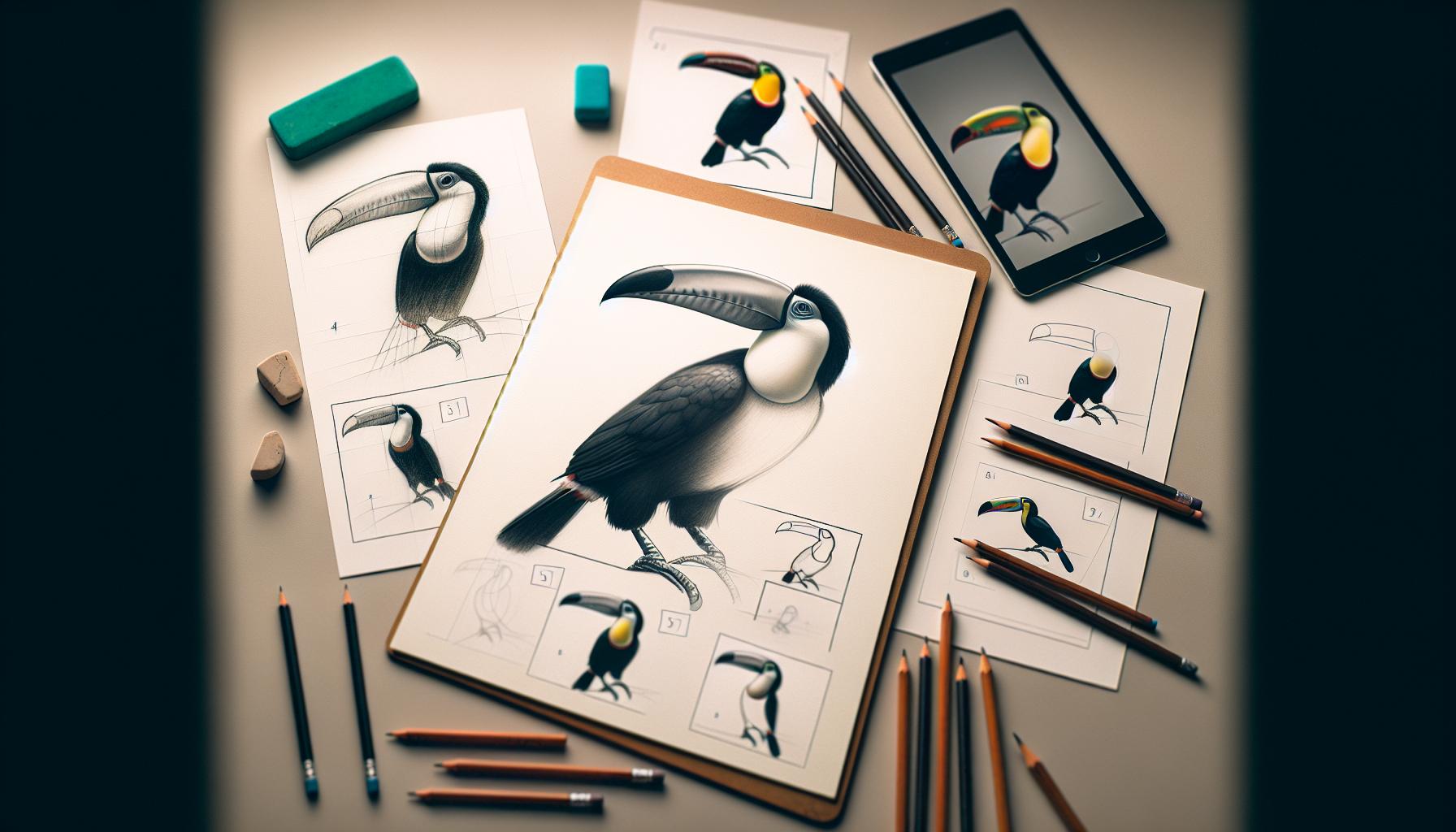
To bring a toucan to life on your paper, starting with a solid base shape is essential. The distinctive profile of a toucan-characterized by its oversized beak and vibrant body-can seem daunting at first, but breaking it down into simple, manageable parts will help you gain confidence and skill in drawing this remarkable bird.
Begin by sketching a rounded shape for the body; this forms the trunk of your toucan. Use light, loose strokes so you can easily adjust as needed. Next, you want to add an oval shape on top of the body for the head. Position it so it’s slightly overlapping with the body to convey that natural look. Now, the most iconic part-the beak! Draw a large, elongated shape extending from the head. Keep in mind the curvature and weight distribution, as the beak curving downward adds realism. Start with a lighter outline of the beak’s shape without getting caught up in details just yet.
Once you have the basic contours in place, connect the head and body gently with a neck shape, ensuring a smooth transition. Begin to refine the tail by sketching a triangular extension from the body’s rear, tapering it to a point. Follow up by crafting the legs, which can be represented by simple lines and angles, keeping the proportions in mind since toucans often perch. Before you finalize everything, step back and evaluate the proportions to ensure they reflect the toucan’s unique anatomy accurately.
In summary, keep your initial sketches light, focusing on shapes and proportions. As you gain comfort with the basic structure, you’ll be ready to move on to detailing and adding vibrancy to your artwork! Don’t rush the process; take your time, and enjoy capturing the beauty of this fascinating bird.
Adding Detail: Features of a Toucan’s Beak and Plumage
To truly capture the essence of a toucan in your drawing, it’s essential to focus on the intricate details of its most recognizable features: the beak and plumage. Toucans are renowned for their vibrant, oversized beaks, which can sometimes appear almost surreal with their bold shapes and bright colors. This beak serves not only as a tool for feeding on fruit and insects but also plays a role in attracting mates. When adding detail to the beak, pay attention to its unique curvature and variations in color, which often include rich yellows, oranges, and blacks. Use smooth, sweeping strokes to depict the beak’s glossy surface, ensuring you highlight the slight texture that gives it dimension.
Next, turn your attention to the plumage. Toucans’ feathers are striking and diverse, usually featuring vivid colors like deep blacks, bright reds, and sunny yellows. Start by layering base colors, then gradually build up the vibrancy using finer brush strokes or colored pencils. Emphasize the subtle gradients and patterns-such as the layers of color along the head, wings, and chest-which add depth and personality to your bird. For those more advanced in their techniques, consider incorporating fine lines to simulate the feather texture, which can make your drawing come alive.
The placement of the feathers and their colors can also vary depending on the species of toucan you wish to represent. For instance, the Keel-billed Toucan boasts a rainbow-like mix of hues that is distinct in its beauty, while the Toucanet offers more muted, earthy tones. Incorporating these variations not only enriches your artwork but also aligns it with real-life ornithological features, making your drawing more authentic.
In your pursuit of capturing this magnificent bird, don’t forget to incorporate slight variations in shading to reflect where light hits the plumage. The interplay of light and shadow is crucial for producing a lifelike quality to your toucan art, making it not only a representation of the species but also a testament to your observational skills and artistic abilities.
Choosing Colors: Painting Your Toucan with Realistic Hues

Capturing the striking beauty of a toucan in your artwork relies heavily on your understanding and choice of color. Toucans are celebrated for their vibrant plumage and unique beak colors, which can range across a dazzling spectrum. To create a lifelike depiction, it’s crucial to approach your color choices thoughtfully, blending the hues that reflect the true essence of these magnificent birds.
Begin by identifying the specific species of toucan you are drawing, as the color palette can differ significantly. For example, the Keel-billed Toucan showcases a vibrant combination of yellows, greens, and blues alongside its dark body, while the Black-mandibled Toucan features deep blacks and yellows. Start with a solid base color that matches the dominant shade of the toucan you’re illustrating. This could mean laying down a rich black for the feathers or a bright yellow for the beak, depending on your subject.
Building Layers and Texture
Once your base layer is in place, gradually add depth by layering additional colors. Use a combination of matte and gloss finishes to replicate the natural sheen of the feathers and beak. For example, layer darker shades within the plumage to create shadows, enhancing the three-dimensional quality of your drawing. Employ a variety of brush sizes or colored pencils to achieve both broad strokes and fine details, notably on the feathers where subtler graduation is essential. Toucans often have intricate patterns within their feathers, so don’t hesitate to blend different hues-such as incorporating deep blues alongside the blacks-to mirror the iridescence found in nature.
Considering Lighting and Environment
Lighting plays a pivotal role in how colors appear. When selecting your palette, consider where the light is coming from-does it create shadows or highlights on the beak? Invest time in blending lighter and darker tones to simulate the effects of light on your toucan’s colors. A touch of white can be added to the lighter parts of the feathers or the beak, providing an enhanced sense of glossiness.
By paying close attention to the color choices and techniques outlined here, your toucan drawing will not only be vibrant but also a true representation of these remarkable birds. As you become more comfortable with color blending and layering, your unique style will emerge, allowing you to create artworks that resonate with both beginners and seasoned artists alike.
Tips for Capturing Ink and Line Work in Your Drawing
When depicting the unmistakable charm of a toucan, capturing the intricacies of ink and line work is crucial for bringing your illustration to life. The fluidity and distinctiveness of your lines can reflect the elegance of these birds, making your artwork not only accurate but also stylistically appealing. Start by selecting the right tools; fine-liners or brush pens in varying sizes can create dynamic line thickness that evokes the texture of a toucan’s feathers and beak.
As you begin your sketch, maintain a light touch and a sketching approach that allows for correction and nuance. The key is in layering your ink – start with essential outlines and gradually build up the defining details. This method allows for a more organic approach where you can play with the interplay of light and shadow. For instance, when outlining the toucan’s beak, vary your pressure to emphasize its curvature and dramatic colors without overwhelming the viewer with black lines. Consider using cross-hatching techniques or stippling to create depth, especially in areas such as the feathers, which can benefit from a soft gradient effect.
It can also be beneficial to observe real toucans or reference photographs while working. Pay attention to the unique shapes and patterns of their plumage, which can inspire expressive line work. Take note of how shadows fall across the bird’s body, which can guide where to apply heavier inkwork versus lighter lines. Incorporating these elements will add a level of realism and finesse to your drawing, making it resonate with the vibrancy of a living toucan.
Ultimately, don’t hesitate to experiment; line work is as much about personal style as it is about accuracy. Allow yourself the freedom to break from traditional interpretations and inject your creativity into the piece. As you refine your technique, your confidence will grow, allowing you to produce illustrations that not only capture the essence of toucans but also reflect your unique artistic voice.
Enhancing Your Toucan Drawing with Background Elements
To create a truly captivating toucan illustration, don’t overlook the power of background elements; they can transform a simple sketch into a vibrant scene. Imagine your toucan perched amidst the lush greenery of a tropical rainforest, surrounded by rich textures and colors that enhance its already stunning profile. Backgrounds play a crucial role in providing context, setting the mood, and drawing attention to your main subject, the toucan itself.
Start by sketching a light outline of your background elements. Think about incorporating elements such as broad, leafy branches, hanging vines, or colorful tropical flowers. Use broad strokes for the foliage to create an impression of depth and density. Layering is key here: start with larger elements in the back, such as trees or distant foliage, and gradually add smaller, more detailed elements as you move forward in the composition. This technique not only guides the viewer’s eye but also establishes a sense of three-dimensionality in your artwork.
Next, consider the colors and textures in your background. Choose shades that complement your toucan’s vivid plumage. For instance, if your toucan sports a bright yellow belly, incorporating hints of soft greens and earthy browns in the background can help to accentuate those bold colors without competing with them. Blurring details in the background can also direct focus back to your toucan. Techniques like ombre effects or gentle washes using watercolors create a softer backdrop that allows the bright colors of the toucan to shine.
Finally, don’t forget about the atmospheric elements such as light and shadow. Consider where your light source is coming from-maybe the sunlight is filtering through the trees, casting dappled shadows over your toucan. Use shading techniques to indicate light and shadow, enhancing the overall depth of the scene. Incorporating these thoughtful details can turn a straightforward toucan drawing into a lively portrayal of its natural habitat, making your artwork not only a tribute to the bird but also a vibrant snapshot of its world.
Common Mistakes to Avoid When Drawing a Toucan
Drawing a toucan can be an exciting endeavor, but it also comes with its challenges. Many artists, whether beginners or more experienced, often stumble upon common pitfalls that can hinder their creative expression. Recognizing and addressing these mistakes can not only enhance your final artwork but also boost your confidence as you bring this vibrant bird to life on paper.
One frequent oversight is neglecting the unique anatomical features of the toucan, notably its beak. This bird is known for its oversized, vividly colored bill, which can easily be misrepresented. When sketching, ensure you pay attention to not just the size and shape, but also the subtle texture and coloration that make the toucan’s beak a standout feature. Many artists may also misplace the proportions of the body in relation to the beak; it’s crucial to remember how the beak connects seamlessly to the head, maintaining the bird’s overall harmony.
Another common mistake is disregarding the complexity of the plumage. Toucans come in various species, each with distinctive color patterns and textures. When coloring, avoid the temptation to simply fill in shapes with flat colors. Instead, use shading techniques to suggest dimension and depth. Highlight areas where light would naturally reflect and add shadows where the feathers overlap. This approach will provide a more realistic portrayal of the toucan, making your drawing pop with vibrancy.
Lastly, many artists overlook the background elements. A toucan is not just a bird on a blank page; it thrives in the rich environments of tropical forests. Incorporating background details can further emphasize the toucan’s vivid colors. Avoid making the background overly detailed or distracting; instead, use softer colors and blended techniques that suggest foliage or tree branches. This way, your toucan remains the focal point while being elegantly situated in its stunning habitat. By steering clear of these common mistakes, you can elevate your toucan drawing from simple to spectacular.
Inspiration from Different Toucan Species: Variations in Style
The toucan family is home to over 40 species, each flaunting distinctive features that can inspire your artwork. When you dive into drawing these marvelous birds, consider exploring how different species can lend a unique flair to your creations. Whether you gravitate toward the bold colors of the Keel-Billed Toucan or the enchanting plumage of the Toco Toucan, each offers its own visual story.
Start by observing the differences in beak shapes and colors. The spectacular beak of the Keel-Billed Toucan, for example, showcases a vibrant palette of green, blue, red, and yellow that can elevate any composition. Contrast this with the Toco Toucan, which features a primarily orange-yellow bill accented by a striking black tip-perfect for creating bold contrasts in your art. By capturing these nuances in your drawings, you’ll not only replicate their beauty but also convey their personalities.
Don’t forget about the body coloration and patterns that vary among species. For instance, the Chestnut-Mandibled Toucan has a more subdued palette, with rich browns and a lighter-colored underside, while the Swanson’s Toucan flaunts bright yellow underparts and distinctive black and orange plumage. Incorporating these variations can enhance the authenticity of your artwork and allow you to experiment with a range of hues and textures.
Pay attention to the habitats that these species prefer, too. Researching where these birds thrive-lush tropical forests, open woodlands, or even mountainous regions-can provide inspiration for background elements in your drawings. Adding details like vines, fruits, and vivid foliage not only enhances the scene but also helps showcase the toucan’s natural environment, making your artwork stand out with a rich context.
By exploring the diverse styles and features found among the various toucan species, you’ll infuse your artwork with creativity and authenticity while ensuring each drawing is as unique as the bird itself.
How to Add Depth and Dimension to Your Toucan Art
When drawing a toucan, adding depth and dimension is crucial to transforming a flat representation into a vibrant, lifelike depiction. One of the most effective techniques to achieve this is through understanding light and shadow. Consider where your light source is coming from, and use it to guide how you add shadows and highlights. For example, the beak of a toucan, with its distinctive curves and bright colors, should have shadows along the lower edges to emphasize its three-dimensional form. Use soft strokes for shading to create a gradual transition, and apply brighter highlights on the edges that catch the light.
Another way to enhance depth is by layering colors. Opt for several shades of the same hue to create richness in your artwork. For instance, when painting the black feathers of a toucan, use a base of deep black yet layer it with subtle hints of dark blue or gray to suggest texture and volume. This technique helps to break up the monotony of color and gives the impression of fluffiness and depth in the feathers.
Background elements can also play a significant role in creating depth. Toucans often inhabit lush environments filled with vibrant foliage. By incorporating layers of leaves, flowers, or branches, you can create the illusion of space. Use softer focus and duller colors for backgrounds to push them back visually, ensuring that the toucan remains the focal point of your artwork.
Finally, implement varying line weights in your ink work or pencil sketching. Thicker lines can be used where shadows fall and lighter lines for areas that catch the light. This not only adds a graphic quality to your work but also accentuates the three-dimensional feel of your toucan drawing. As you refine these techniques, you’ll find that your toucan art not only captures the beauty of these magnificent birds but also showcases their personality through thoughtful representation.
Final Touches: Shading Techniques for a Stunning Finish
To achieve a stunning finish in your toucan artwork, mastering shading techniques is essential. Shading adds depth and dimension, transforming your drawing from a flat image into a lifelike representation. Start by determining the light source in your composition; this will guide where your shadows and highlights should fall. For toucans, which often display vibrant and contrasting colors, using shading effectively can make features like their beak pop and their feathers appear more voluminous.
Begin with a light hand, applying soft strokes to create an initial layer of shading. For example, instead of solidly coloring the toucan’s glossy black feathers, use a mix of dark gray and blue to suggest texture and light reflection. Layering is crucial; gradually build up darker tones where shadows naturally fall, such as underneath the beak and along the body. Consider the toucan’s unique plumage: the striking colors can benefit from subtle transitions between shades. This technique helps prevent harsh lines and gives your work a more polished look.
To highlight the beak’s curvature, use a brighter highlight along the edges where the light would hit it directly. Apply a glossy finish to the beak’s tips to mimic its natural sheen. Don’t forget to incorporate shadows on the underside of the beak to ground it in the composition. Creating depth isn’t just about the toucan itself; think of the environment. Softly feathered strokes can suggest foliage in the background, ensuring the bird remains the focal point while enhancing the overall scene.
Finally, embrace experimenting with various tools-charcoal, colored pencils, or even acrylic paints. Each medium has its own way of blending and shading. Practice on scrap paper to find the techniques that best match your style, whether it’s creating sharp contrasts or smooth gradients. By honing these shading techniques, you’ll not only highlight the beauty of the toucan but also develop your unique artistic voice.
Frequently asked questions
Q: What are the best drawing supplies for sketching a toucan?
A: For drawing a toucan, use high-quality sketch paper, graphite pencils for outlining, and fine-tipped pens for details. Colored pencils or watercolor paints are great for adding vibrant colors. Refer to the section on gathering drawing supplies in the tutorial for more detailed recommendations.
Q: How do I capture the unique shape of a toucan’s beak in my drawing?
A: To capture a toucan’s beak, focus on its distinctive curved shape and coloration. Start with a basic outline, then gradually add texture and shading to define the contours. Be sure to consult the section on adding detail to understand the beak’s features better.
Q: What colors are best for painting a realistic toucan?
A: For a realistic toucan, use a mix of bright yellows, reds, and blacks, complemented by subtle greens for foliage background. Look at different toucan species for color inspiration. See the painting section of the tutorial for specific color combinations.
Q: What common mistakes should I avoid when drawing a toucan?
A: Avoid overcomplicating the shapes and proportions, which can distort the overall look. Ensure you are familiar with toucan anatomy, especially their beak and body shape. Check the section on common mistakes for a comprehensive list and tips to improve your drawing.
Q: How can I add depth and dimension to my toucan drawing?
A: To add depth, focus on shading techniques that reflect light and shadow. Use darker shades under the wings and around the beak for contrast. The section on enhancing your drawing provides specific shading techniques for achieving a three-dimensional effect.
Q: How can I improve my line work when drawing a toucan?
A: Improve line work by practicing varying line thickness, which can define shape and focus. Use lighter lines for initial sketches, then go over them with darker, precise lines for details. Refer to the tips section for more advice on capturing crisp line work.
Q: What should I consider when choosing a background for my toucan drawing?
A: Consider the setting where toucans live, such as tropical rainforests with lush greenery and colorful flowers. A well-chosen background enhances the overall composition. The tutorial includes guidance on enhancing your drawing with background elements to make your toucan pop.
Q: Where can I find inspiration for different toucan species to draw?
A: Explore online wildlife databases, nature documentaries, or art platforms for varied toucan species. Look specifically at their color patterns and distinctive features for inspiration. The tutorial’s inspiration section discusses different species, providing further insight into their unique characteristics.
Future Outlook
Congratulations on finishing your toucan drawing journey! By following our easy step-by-step tutorial, you’ve not only engaged your creativity but also gained a deeper appreciation for these magnificent birds. Don’t let your enthusiasm stop here-why not check out our related guides on “How to Draw Other Exotic Birds” or dive deeper into “Tropical Bird Behaviors” for more artistic inspiration?
Remember, practice makes perfect, so keep sketching and exploring! If you enjoyed this tutorial, subscribe to our newsletter for more tips and exclusive content that can elevate your art skills. Have questions or want to share your artwork? Drop a comment below-we’d love to see your creations and hear your feedback. Your artistic adventure continues here, so keep creating and stay inspired!